
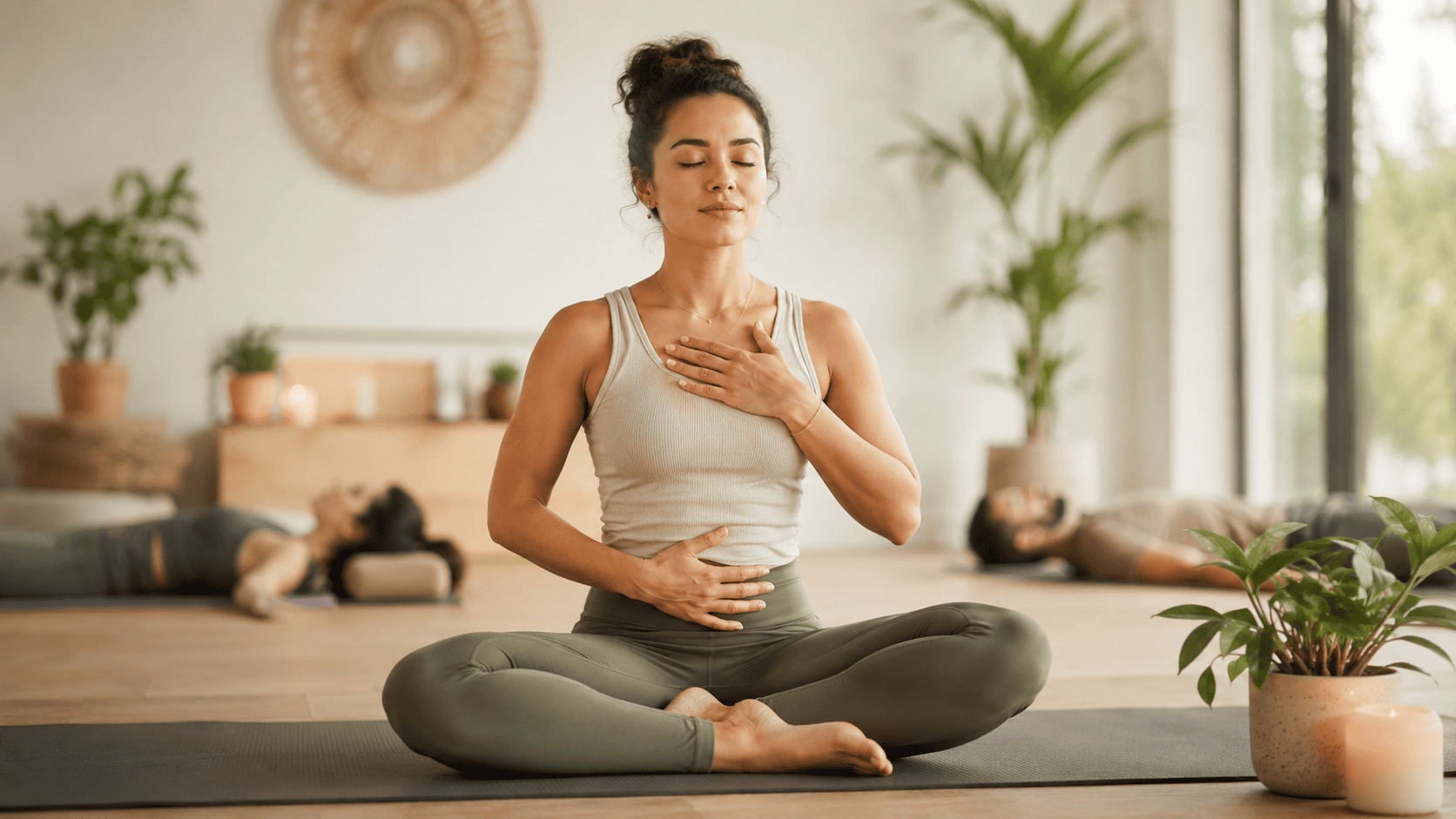
Yoga For Nervous System Regulation: Breath And Calm Poses
Stress is not only something we experience in our thoughts. It also appears in the body through shallow breathing, tense shoulders, digestive discomfort, restlessness, fatigue, difficulty concentrating, or feeling disconnected from the present moment.
Yoga for nervous system regulation uses breath, movement, awareness, and supported rest to help the body respond to stress more flexibly. The goal is not to remain calm every moment. Regulation means developing the ability to move between activity, focus, rest, and recovery without becoming stuck in one state.
A nervous system friendly yoga practice does not need to be long, physically demanding, or perfectly performed. Even a few minutes of steady breathing, rhythmic movement, and intentional rest may help the body recognize that it is safe to soften.
What Is Nervous System Regulation?
The nervous system constantly gathers information from inside and outside the body. It notices sounds, movement, facial expressions, physical sensations, environmental changes, and perceived threats.
The autonomic nervous system manages many processes that happen without conscious effort, including heart rate, digestion, breathing, and the stress response. Two major parts of this system are the sympathetic and parasympathetic nervous systems.
The sympathetic nervous system supports activation. It helps us respond when we need energy, focus, protection, or quick action. The parasympathetic nervous system supports rest, digestion, recovery, and restoration.
Neither state is bad. Problems can arise when the body remains activated long after a stressful experience has passed or shifts into numbness, exhaustion, or disconnection. Regulation is the ability to respond appropriately and gradually return to a more settled state.
How Yoga Supports The Nervous System
Yoga combines several tools that may influence how the body processes stress. Breath awareness can slow the pace of a practice, while gentle movement can reduce muscular holding patterns and reconnect attention with physical sensation.
Supported poses reduce the amount of effort the body must produce. Meditation and mindful awareness can also help people notice stress responses before they become overwhelming.
Over time, consistent practice may support:
Greater awareness of physical stress signals
More comfortable breathing during difficult moments
Improved recovery following stress
Reduced muscular tension
Better emotional awareness
A stronger sense of presence and connection
Yoga is not about forcing the nervous system into relaxation. A thoughtful practice creates conditions in which the body may choose to settle.
The Vagus Nerve And The Breath
The vagus nerve is an important part of the parasympathetic nervous system. It connects the brain with areas of the heart, lungs, throat, and digestive system.
Breathing practices are often used to support parasympathetic activity because breathing is both automatic and consciously adjustable. Slowing the breath, particularly the exhale, may communicate that immediate action is no longer required.
One accessible pattern is to inhale gently for four counts and exhale for six counts. The breath should remain comfortable and unforced. If counting creates tension, return to natural breathing and simply notice the movement of the ribs or abdomen.
Humming and Bhramari, sometimes called humming bee breath, may also feel grounding because vibration creates a clear physical sensation around the face, throat, and chest. These practices should remain optional, especially in trauma-informed settings.
Yoga Poses For Nervous System Regulation
Different bodies respond to different forms of movement and rest. Some people settle through stillness, while others need gentle movement before quiet poses feel comfortable.
The following practices can be adjusted with blankets, cushions, chairs, or wall support.
Cat-Cow
Cat-Cow combines breath with repetitive spinal movement. The rhythm can help release tension in the neck, back, shoulders, and rib cage.
Move slowly between a rounded and gently extended spine. The movement can also be practiced while seated if hands and knees are uncomfortable.
Child’s Pose
Child’s Pose can create a sense of grounding and physical containment. Place a bolster or folded blankets beneath the chest if lowering toward the floor feels strained.
Keeping the knees wider may provide more space for breathing. Students should also feel welcome to choose another resting position if folding inward feels uncomfortable.
Legs-Up-The-Wall
Legs-Up-The-Wall is a low effort pose that allows the back body to rest against the floor. The legs can extend upward or bend slightly depending on comfort.
A folded blanket beneath the hips is optional. People with certain eye, cardiovascular, or pregnancy related concerns may need a different position, such as placing the lower legs on a chair.
Constructive Rest
Constructive Rest is a useful alternative to Savasana. Lie on the back with the knees bent and the feet on the floor, allowing the knees to rest together or remain hip width apart.
This position can reduce effort in the lower back while helping the body feel supported and connected to the ground.
Side-Lying Rest
Resting on one side may feel safer than lying flat on the back. Place a pillow beneath the head and another between the knees.
Trauma-informed yoga recognizes that there is no single correct resting position. Comfort, choice, and agency matter more than the traditional appearance of a pose.
A Gentle 15-Minute Regulation Practice
A brief practice can fit into the beginning of the day, a work break, or the transition before sleep. Move at a pace that feels steady rather than rushed.
Try the following sequence:
Spend two minutes noticing your surroundings and the points where your body meets the floor or chair.
Practice gentle longer exhales for three minutes.
Move through Cat-Cow or seated spinal waves for three minutes.
Rest in Child’s Pose or a supported forward fold for three minutes.
Finish with Legs-Up-The-Wall, Constructive Rest, or side-lying rest for four minutes.
Keep the eyes open if that feels more comfortable. Pause when needed, return to natural breathing, and notice whether the body wants more movement or more support.
Somatic Yoga And Body Awareness
Somatic yoga emphasizes internal sensation rather than the external appearance of a pose. Movements are often slow, exploratory, and guided by curiosity.
This approach may support interoception, which is the ability to notice signals from within the body. These signals can include temperature, heartbeat, breathing, tension, fatigue, hunger, and emotional sensations.
Somatic practice does not require students to analyze or explain every feeling. The purpose is to develop a respectful relationship with the body and notice what supports steadiness in the present moment.
Yoga Farm’s approach to trauma-informed yoga training places choice, nervous system awareness, consent, and accessible teaching at the center of practice.
Kundalini Yoga And Nervous System Awareness
Kundalini yoga often combines movement, breathwork, meditation, mantra, and focused awareness. These practices can feel energizing, grounding, emotionally moving, or deeply restful depending on their intensity and duration.
Because Kundalini practices can be powerful, trauma-informed pacing is essential. Students should have permission to reduce the speed of movement, breathe naturally, rest, keep their eyes open, or stop a practice entirely.
The Kundalini Warrior training presents Kundalini through a modern, accessible, and choice-based framework. The program emphasizes personal sovereignty rather than rigid performance or hierarchy.
Qigong As A Rhythmic Regulation Practice
Qigong uses posture, breath, awareness, and slow repetitive movement. Many practices can be completed while standing or seated, making Qigong accessible to people who may not feel comfortable with floor-based yoga.
Rhythmic movement can give the nervous system something predictable to follow. Repeating a gentle motion while breathing naturally may help reduce bracing and support a feeling of continuity.
Students interested in integrating these principles into personal practice or teaching can explore Qigong teacher training, which includes accessible movement, energetic anatomy, breath patterns, and traditional Qigong foundations.
Co-Regulation In Yoga Classes
Nervous system regulation is not always an individual process. People often respond to the pace, voice, facial expressions, and energy of those around them.
This is known as co-regulation. A grounded teacher can help establish a more supportive environment by slowing down, speaking clearly, and allowing enough time between instructions.
Yoga teachers can support co-regulation by:
Taking several minutes to settle before class
Using a steady and natural voice
Leaving purposeful pauses
Offering options instead of commands
Normalizing rest and modification
Asking consent before physical adjustments
Avoiding assumptions about what students feel
The teacher does not need to appear perfectly calm. Authentic presence and clear boundaries are more valuable than performing serenity.
When Yoga Feels Activating
Practices commonly described as calming do not feel calming for everyone. Closing the eyes, lying still, breathing deeply, or focusing inward may increase discomfort for some students.
A trauma-informed approach makes room for these responses without treating them as failure. Students can look around the room, sit near an exit, keep their eyes open, change positions, or return to ordinary breathing.
Intense breath retention, rapid breathing, forceful movement, and prolonged stillness should be introduced carefully. Yoga may support wellbeing, but it is not a replacement for mental health treatment, medical care, or personalized professional support.
Creating A Sustainable Practice
Consistency is usually more supportive than intensity. Five to fifteen minutes of practice may be more useful than an occasional long session that feels exhausting.
Choose one breathing practice, one gentle movement, and one supported resting pose. Notice how you feel before, during, and after the sequence without demanding a specific result.
The Online Yoga Academy offers ongoing yoga, meditation, workshops, and community support for students who want to develop a steady practice without pressure or perfection.
Frequently Asked Questions
What Type Of Yoga Is Best For Nervous System Regulation?
Restorative yoga, somatic yoga, gentle Hatha, Yoga Nidra, accessible Kundalini, and slow Qigong practices may all support regulation. The best choice is one that feels safe, manageable, and appropriate for your body.
What Yoga Poses Calm The Nervous System?
Common options include Cat-Cow, Child’s Pose, Legs-Up-The-Wall, Constructive Rest, supported forward folds, and side-lying rest. No pose is calming for everyone, so modifications should always be available.
Can Yoga Help With Fight Or Flight?
Yoga may help the body recover from fight-or-flight activation through slower breathing, grounding, rhythmic movement, and supported rest. It does not eliminate stress but may improve recovery after stressful experiences.
Can Breathwork Make Anxiety Feel Worse?
Yes. Deep breathing, rapid breathing, and breath retention can feel activating for some people. Natural breathing or a very gentle longer exhale may be more supportive.
How Often Should I Practice Yoga For Regulation?
A few minutes each day can be enough to build familiarity. Regular, gentle practice is often more sustainable than occasional intense sessions.
Is Somatic Yoga Helpful For Regulation?
Somatic yoga may support regulation by developing body awareness, encouraging slow movement, and reducing pressure to perform poses. It focuses on internal experience rather than flexibility or appearance.
Is Yoga A Replacement For Therapy?
No. Yoga can complement therapy and medical care, but it should not replace professional treatment when additional support is needed.