
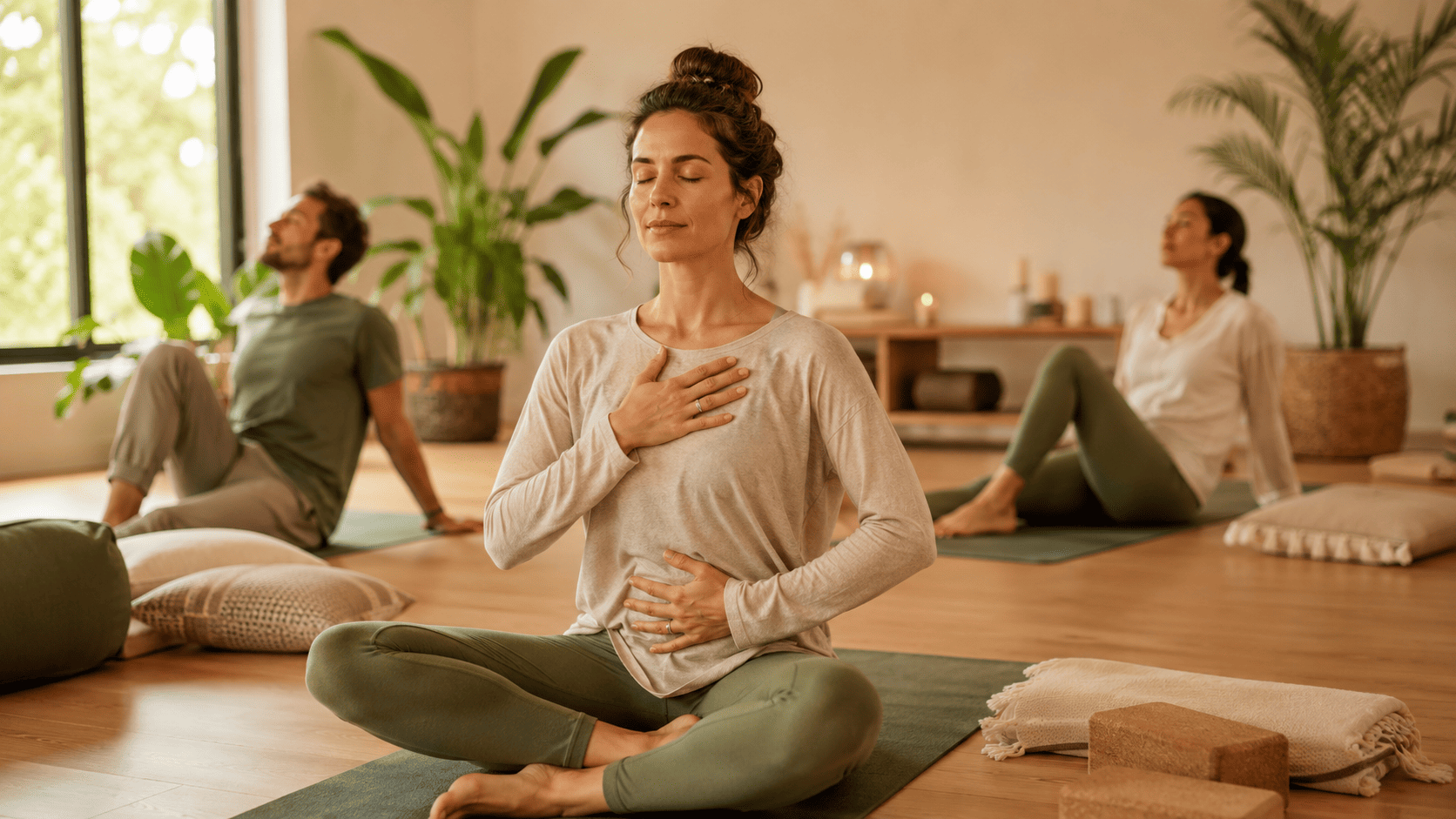
What Is Somatic Yoga? Benefits, Poses, And How To Practice
Many people arrive at yoga carrying more than tight muscles. Stress can live in the jaw, shoulders, hips, belly, breath, posture, and even in the way we move through the day. Sometimes the body keeps bracing long after the stressful moment has passed.
Somatic yoga offers a slower, more listening-based way to practice. Instead of trying to achieve a perfect pose, it invites you to notice what is happening inside your body with curiosity, compassion, and patience.
This kind of practice can be especially supportive for people who feel disconnected from their bodies, overwhelmed by stress, or unsure how to move without pushing. It is gentle, but it is not passive. Somatic yoga asks you to become present enough to feel, choose, pause, soften, and begin again.
What Is Somatic Yoga?
Somatic yoga is a mindful movement practice that focuses on internal physical sensation rather than external form. The word “somatic” comes from “soma,” which refers to the body as experienced from within.
In a somatic yoga practice, the question is not, “Does this pose look right?” The question is, “What do I feel right now?” That shift changes the whole experience. Movement becomes less about performance and more about awareness.
A somatic yoga class may include slow floor movements, breath awareness, body scanning, gentle stretching, subtle rocking, supported rest, and pauses between movements. The pace is usually slow enough for the nervous system to notice what is happening.
Somatic yoga can include familiar yoga shapes, but it approaches them differently. A pose may become smaller, softer, slower, or more exploratory. The goal is not to force the body into alignment. The goal is to help the body feel safe enough to release old tension patterns and discover new options.
How Is Somatic Yoga Different From Regular Yoga?
Many traditional yoga practices already include somatic elements. Breath, awareness, stillness, sensation, and presence have always been part of yoga. The difference is that many modern yoga classes often focus on alignment, strength, flexibility, flow, or the visible shape of a pose.
Somatic yoga brings the attention back inside. It removes the pressure to look a certain way and gives the student permission to move from lived experience.
In a regular yoga class, a teacher may cue a pose with specific alignment instructions. In a somatic class, the teacher may invite you to explore a movement slowly, notice where the breath moves, pause when something changes, and choose the range of motion that feels useful.
Somatic yoga can be helpful for beginners because it does not require flexibility, athletic ability, or experience. It can also be meaningful for experienced practitioners who want a more intimate relationship with their body and nervous system.
How Somatic Yoga Works
Somatic yoga works by slowing movement down enough for the brain and body to communicate more clearly. Many of us move through the same patterns every day without noticing them. We clench the jaw, lift the shoulders, grip the hips, hold the belly, or brace the lower back.
These patterns may begin as protection. Over time, they can become habits. The body may keep holding even when the original stress is gone.
Somatic yoga helps you notice those patterns without judgment. Through gentle repetition, breath, and rest, the nervous system may begin to understand that it has more choices.
A somatic practice often works with three kinds of awareness. Interoception is the ability to sense what is happening inside the body, such as breath, heartbeat, warmth, pressure, or tension. Proprioception is the ability to sense where your body is in space. Exteroception is the ability to notice the environment around you, such as sound, light, temperature, and support.
Together, these awareness skills help you feel more present in your body and more connected to the moment you are in.
Benefits Of Somatic Yoga
Somatic yoga is not about forcing a release or creating a dramatic experience. Its benefits often come through small, consistent practices that help the body feel less guarded over time.
For some people, the first benefit is simply realizing how much they have been holding. For others, it may be the first time movement feels kind instead of corrective.
Builds Body Awareness
Somatic yoga helps you notice subtle body signals before they become overwhelming. You may begin to sense when your shoulders rise, when your breath becomes shallow, or when your body is asking for rest.
This awareness can become useful outside of practice. You may notice stress earlier during a workday, feel when you need to pause during a conversation, or recognize when your body is moving into tension before pain increases.
Body awareness is not about monitoring yourself perfectly. It is about building a more honest relationship with your own signals.
Supports Stress Relief
Stress often shows up in the body before the mind fully understands it. The nervous system may move into fight, flight, freeze, or shutdown when life feels too fast, too loud, or too much.
Somatic yoga offers a slower rhythm. Gentle movement, breath, grounding, and rest can help the body remember that it does not always have to brace.
The practice does not demand calm. That matters. For many people, being told to relax can feel frustrating or impossible. Somatic yoga creates the conditions for calm to become more available, without forcing the body to perform relaxation.
May Help Ease Chronic Tension And Pain
Chronic tension often develops through repeated patterns. A person may hold stress in the jaw, neck, shoulders, lower back, hips, or pelvic floor without realizing it.
Somatic yoga can help bring these holding patterns into awareness. With slow movement and gentle release, the body may begin to soften areas that have been working too hard.
This does not mean somatic yoga replaces medical care, physical therapy, or pain treatment. It may support pain management by helping you move with more awareness, reduce unnecessary gripping, and build trust in gentle movement again.
Supports Trauma Recovery And Emotional Regulation
Trauma can affect the way the body breathes, moves, rests, and responds to sensation. Some people feel disconnected from their bodies. Others feel overwhelmed by body sensations. Some feel both at different times.
Somatic yoga can support trauma recovery when it is offered with care, choice, pacing, and consent. A trauma-informed approach gives students permission to keep their eyes open, skip a movement, change positions, pause, or stop.
Yoga Farm’s approach to trauma-informed teacher trainings reflects this same respect for choice, accessibility, and nervous system awareness. The practice is not about pushing through discomfort. It is about rebuilding trust with the body in a way that feels safe enough.
People with severe trauma symptoms, panic, dissociation, or active crisis should work with a qualified mental health professional. Somatic yoga can be supportive, but it should not be treated as a replacement for therapy or medical care.
Improves Mobility, Posture, And Movement Confidence
Posture is not just about standing up straight. Often, posture reflects habits, stress, protection, fatigue, and unconscious muscle patterns.
Somatic yoga helps you notice how you move instead of forcing you into a corrected shape. You may discover that a tight back is connected to guarded hips, that shoulder tension is connected to breath, or that your body has been using effort where ease is possible.
Over time, this can support better mobility and more confidence in movement. Instead of pushing the body to perform, you begin to cooperate with it.
Encourages Better Breathing
Many people breathe shallowly when they are stressed. The breath may stay high in the chest, become held, or feel disconnected from movement.
Somatic yoga often begins by noticing the breath rather than controlling it. That gentle awareness can be powerful. When the body feels less pressured, breath may naturally deepen, spread, or soften.
Some practices include longer exhales, humming, sighing, or simple breath observation. These tools can help the nervous system settle without turning breathwork into another place to strive.
Helps Beginners Feel Safer In Practice
Somatic yoga is often a good fit for beginners because it is adaptable. Movements can be small, seated, lying down, or supported with props.
There is no need to touch your toes, hold difficult poses, or keep up with a fast sequence. The practice meets the body where it is.
This can be especially meaningful for people who have felt intimidated by yoga, disconnected from fitness spaces, or unsure whether their body belongs in a class. Somatic yoga reminds us that practice does not have to be impressive to be meaningful.
Somatic Yoga And The Nervous System
The nervous system is constantly scanning for safety, threat, connection, and support. When life feels stressful, the body may move into activation. When stress feels too much, the body may shut down or disconnect.
Somatic yoga supports nervous system regulation by slowing the pace and increasing choice. A slower practice gives the body time to notice the ground, the breath, the room, the teacher’s voice, and the present moment.
Rest between movements is also important. These pauses allow the body to integrate what just happened. In somatic yoga, rest is not an afterthought. It is part of the practice.
This is one reason somatic yoga can feel different from stretching. Stretching may focus on lengthening a muscle. Somatic yoga focuses on how the body senses, responds, protects, releases, and reorganizes.
Somatic Yoga, Kundalini, And Qigong
Somatic yoga connects naturally with other body-based spiritual practices. Kundalini yoga, when taught through a modern and trauma-aware lens, also works with breath, repetition, sound, meditation, and inner awareness.
Students drawn to breath, mantra, and energetic practice may find resonance with Yoga Farm’s modern Kundalini teacher training, especially when they want a practice that honors embodiment rather than bypassing the body’s signals.
Qigong also shares many somatic qualities. It is often slow, breath-led, rhythmic, and accessible. Many Qigong practices can be done standing or seated, which may feel supportive for people who do not connect with mat-based yoga.
The gentle, energy-based movement in Yoga Farm’s online Qigong teacher training offers another path for students who want to develop body awareness, breath connection, and internal steadiness.
Somatic Yoga Vs Restorative Yoga Vs Yin Yoga
Somatic yoga is sometimes confused with restorative or yin yoga because all three can be slow and gentle. They are related, but they are not the same.
Somatic yoga focuses on internal sensation, small movements, nervous system awareness, and choice-based exploration. It often includes gentle movement in and out of positions.
Restorative yoga uses props to fully support the body in restful shapes. The purpose is usually deep rest, release, and recovery.
Yin yoga uses longer-held passive stretches to work with connective tissue, stillness, and meditative awareness. It can be quiet and spacious, but it may involve more intensity than somatic yoga.
Each practice has value. The best choice depends on what your body needs that day.
Beginner Somatic Yoga Poses And Exercises
Somatic yoga does not require complicated poses. Simple movements can be deeply effective when practiced with attention.
A few beginner-friendly options include:
Body Scan: Lie down or sit comfortably and notice sensations from head to toe without trying to change anything.
Pelvic Tilts: Lying on your back, gently rock the pelvis forward and back while noticing the lower back and breath.
Knee Rocks: With knees bent, slowly move the knees side to side and sense the spine, hips, and belly.
Slow Cat-Cow: Move the spine with breath while paying attention to sensation rather than range.
Shoulder Rolls: Roll the shoulders slowly and notice the neck, jaw, chest, and upper back.
Constructive Rest: Lie on your back with knees bent and feet on the floor, allowing the body to settle.
Standing Grounding: Stand with both feet on the floor and notice weight, balance, and support.
The key is not how far you move. The key is how much you can notice while moving.
Can Somatic Yoga Help With Weight Loss?
Somatic yoga is not mainly a weight-loss workout. It usually does not burn calories in the same way as cardio, strength training, or a vigorous vinyasa class.
Still, it may support weight-related goals indirectly. Stress, poor sleep, chronic pain, emotional eating, and body disconnection can all affect a person’s relationship with movement and health.
Somatic yoga may help by improving body awareness, reducing stress, supporting sleep, easing tension, and helping movement feel safer. For someone who has avoided exercise because of pain, shame, or overwhelm, this can be an important starting point.
A balanced weight-loss plan usually includes nutrition, strength, cardiovascular movement, rest, and medical guidance when needed. Somatic yoga can be one supportive piece, not the whole plan.
Does Somatic Yoga Actually Work?
Somatic yoga can work well for people who want to reduce stress, improve body awareness, soften chronic tension, support emotional regulation, and reconnect with gentle movement.
It may not feel satisfying for someone looking for fast fitness results, intense sweating, or dramatic transformation in one session. The practice is subtle. Its effects often build over time.
Consistency matters more than intensity. A few minutes of gentle, honest practice done regularly can be more useful than one long session where the body feels pushed.
Is Somatic Yoga Legit?
Somatic yoga is a legitimate body-based practice, but it is important to be honest about what it can and cannot do.
It can support nervous system regulation, awareness, tension release, and a kinder relationship with the body. It may also complement therapy, physical therapy, mindfulness, and other healing practices.
It should not be marketed as a cure for trauma, anxiety, PTSD, chronic illness, or chronic pain. Responsible somatic yoga respects scope of practice and avoids making promises the body cannot safely keep.
A grounded teacher will invite choice, offer modifications, avoid pressure, and encourage students to seek professional support when needed.
How Often Should You Practice Somatic Yoga?
Beginners can start with 10 to 15 minutes, two or three times a week. Some people prefer a short daily practice, especially before bed or after stressful moments.
There is no need to do a long practice every time. Somatic yoga is often most helpful when it becomes part of daily listening.
You might pause during the day to notice your breath, soften your jaw, feel your feet, or gently move your shoulders. These small moments teach the body that awareness is available outside of class too.
Somatic Yoga Training And Teaching
Yoga teachers, coaches, therapists, bodyworkers, wellness professionals, and facilitators may study somatic principles to offer more embodied, trauma-aware support.
A strong training should include nervous system education, invitational language, consent, accessibility, breath safety, scope of practice, and practice teaching. It should also help teachers understand that students do not need to be fixed, forced, or pushed into release.
Yoga Farm Ithaca is a nonprofit modern yoga school offering online and in-person classes, certification programs, retreats, and community learning. Its work centers inclusive practice, spiritual wellbeing, accessibility, and trauma-informed education.
Students who want ongoing practice before entering a training may find support through an online yoga membership, while local students can experience somatic movement and gentle classes through Ithaca studio classes.
Common Myths About Somatic Yoga
One common myth is that somatic yoga is just stretching. Stretching can be part of it, but somatic yoga is more about awareness, sensation, and nervous system response than simply lengthening tissue.
Another myth is that emotional release has to happen. Some people may cry, shake, sigh, or feel emotion during practice. Others may simply feel calmer, more present, or more aware. There is no required response.
Somatic yoga also does not replace therapy. It can support healing, but mental health care is important for trauma, anxiety, depression, and crisis symptoms.
A final myth is that small movements do not matter. In somatic practice, small movements often reveal the most. When the body is not pushed, it may finally have space to speak.
FAQs About Somatic Yoga
Does Somatic Yoga Actually Work?
Somatic yoga may help improve body awareness, reduce stress, ease tension, and support nervous system regulation. It works best when practiced consistently and taught with care, choice, and realistic expectations.
How Is Somatic Yoga Different From Regular Yoga?
Regular yoga often focuses on poses, alignment, strength, flexibility, or flow. Somatic yoga focuses more on internal sensation, breath, pacing, choice, and how movement feels from within.
Can You Really Lose Weight With Somatic Yoga?
Somatic yoga is not mainly a weight-loss practice. It may support weight-related goals indirectly by reducing stress, improving mobility, supporting sleep, and helping people reconnect with movement in a kinder way.
What Are The Top 3 Somatic Exercises?
Three beginner-friendly somatic exercises are body scans, pelvic tilts, and gentle knee rocks. These simple practices help build awareness, soften tension, and support nervous system settling.
Is Somatic Yoga Good For Beginners?
Yes. Somatic yoga is often beginner-friendly because it uses slow, adaptable movements. You do not need flexibility, experience, or special equipment to begin.
Can Somatic Yoga Help With Anxiety?
Somatic yoga may support anxiety by helping the body slow down, notice breath, feel grounded, and return to the present moment. It should not replace mental health care when professional support is needed.
Is Somatic Yoga Good For Trauma?
Somatic yoga can support trauma recovery when it is taught through a trauma-informed lens. Choice, consent, pacing, and safety are essential. People with severe trauma symptoms should work with a qualified provider.
Can I Do Somatic Yoga At Home?
Yes, many people practice somatic yoga at home. Start with short, gentle practices and stop if you feel overwhelmed, numb, dizzy, or unsafe. A qualified teacher can help you build confidence and trust.
Final Thoughts
Somatic yoga is a practice of listening. It invites the body out of performance and into relationship. Instead of asking the body to become more impressive, it asks what the body has been holding, protecting, and quietly communicating.
For some people, that begins with a softer breath. For others, it begins with feeling the floor, relaxing the jaw, or realizing they can move without forcing.
The benefits of somatic yoga are not only physical. This practice can help rebuild trust, support nervous system regulation, and create a more compassionate way to live inside your own body. In a world that often teaches us to override our signals, somatic yoga offers another path: slow down, feel, choose, and return.