
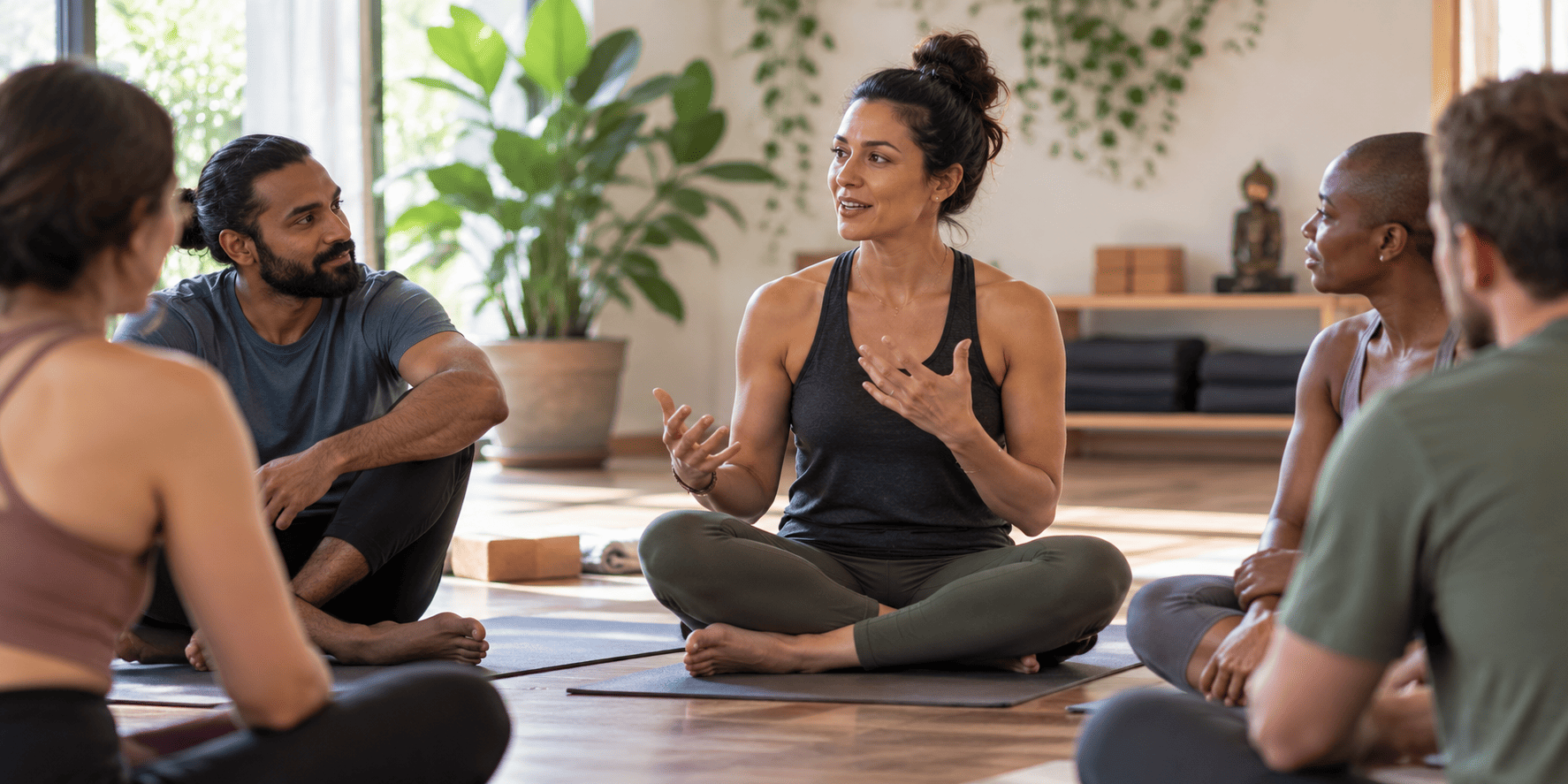
How to Use Inclusive Language When Teaching Yoga
The words we use as yoga teachers shape how students experience their practice. A simple instruction can create a sense of possibility, or it can unintentionally leave someone feeling that their body, abilities, or experience do not belong.
Using inclusive language when teaching yoga means choosing words that respect different bodies, identities, backgrounds, and needs. It involves offering meaningful choices, avoiding assumptions, and helping students participate without pressure to perform.
The goal is not to memorize a perfect script. It is to communicate with greater awareness, clarity, and respect.
What Is Inclusive Language in Yoga?
Inclusive language in yoga is communication that welcomes people with different physical abilities, gender identities, cultural backgrounds, and lived experiences.
Rather than assuming every student can move, breathe, or experience a posture in the same way, inclusive teaching recognizes that each person brings a unique body and history to the mat.
For example, instead of saying, "Everyone should be able to touch their toes," a teacher might say, "You can bend your knees, reach toward the floor, or place your hands on blocks."
The second instruction communicates the movement while making room for different possibilities.
Why Inclusive Language Matters When Teaching Yoga
Students may arrive with chronic pain, limited mobility, pregnancy-related changes, trauma histories, body image concerns, or simply very different levels of experience.
Language that emphasizes perfection, endurance, or obedience may unintentionally create pressure. More thoughtful instruction helps students make informed decisions about their participation.
This is particularly important in trauma-sensitive yoga teaching, where choice, predictability, and respect for personal boundaries are central to the classroom experience.
Inclusive language does not mean avoiding challenges or detailed instructions. It means helping students explore those challenges without making them feel that there is only one acceptable way to practice.
8 Ways to Use Inclusive Language in Yoga Classes
Small changes to familiar teaching phrases can make a meaningful difference. These eight approaches offer practical ways to make yoga instruction more accessible and respectful.
1. Use Gender-Neutral Greetings
Instead of addressing your class as "ladies," "gentlemen," or "guys," consider welcoming everyone as "students," "everyone," or simply "welcome."
Respect the names and pronouns students share without making assumptions based on appearance. If you are unsure how someone wishes to be addressed, use their name or ask respectfully in private.
2. Offer Choices Instead of Commands
Invitational language gives students room to decide how they participate.
For example, "You might explore lifting your arms overhead" offers more flexibility than "Everyone must raise their arms."
Direct instructions still have a place, especially when explaining a movement or addressing an immediate safety concern. The important distinction is whether students understand that they can adjust, pause, or decline.
3. Avoid Ranking Yoga Poses
Terms such as "full expression," "easy version," and "advanced option" can suggest that certain bodies or movements are more successful than others.
Instead, describe what changes between variations.
You might say, "You can keep your back knee grounded or lift it if that feels appropriate." Both options become valid approaches rather than different levels of achievement.
4. Normalize Props and Accessible Variations
Blocks, straps, blankets, and chairs are valuable teaching tools, not signs that someone is struggling.
Rather than waiting until a student cannot complete a movement, introduce props as ordinary options for everyone.
Teachers interested in chair yoga instruction can also explore how seated movements, supported postures, and thoughtful cueing expand participation for students with different mobility needs.
5. Focus on Function Rather Than Appearance
A pose does not need to look identical in every body to offer a meaningful experience.
Instead of asking students to achieve a particular shape, explain the movement's intention and offer practical points of reference.
For example, "Explore lengthening through your spine while keeping your footing steady" provides useful guidance without requiring everyone to look like the demonstration.
6. Avoid Assuming What Students Feel
Statements such as "You should feel a deep stretch" assume that everyone experiences the movement similarly.
A more inclusive cue might be, "Notice where you experience sensation, if any, and whether adjusting your position changes it."
This approach also connects with somatic yoga practices, where noticing sensation and responding to one's experience can be more important than achieving an externally defined shape.
7. Use Body-Neutral Language
Avoid comments that connect a successful yoga practice with weight loss, calorie burning, physical appearance, or particular body proportions.
Phrases such as "Let's work off those holiday meals" can introduce unnecessary judgments into a space intended for practice.
Instead, discuss balance, mobility, concentration, strength, or the experience of movement without attaching worth to appearance.
8. Respect Different Life Experiences
Students may have different family structures, beliefs, disabilities, relationships, and experiences of pregnancy or parenthood.
Avoid assuming that everyone celebrates the same holidays, follows a particular spiritual tradition, or identifies with gendered descriptions.
Language that leaves room for individual experience allows students to participate without feeling pressured to explain themselves.
How to Use Inclusive Language During Breathwork and Meditation
Inclusive teaching extends beyond physical postures. Breathwork, meditation, and stillness can create different experiences for different students.
Rather than requiring everyone to breathe deeply, hold their breath, or close their eyes, explain the practice and offer participation options.
For example, "You are welcome to follow the breathing pattern or continue breathing naturally" respects students who may find controlled breathing uncomfortable.
During Savasana, allow students to rest on their backs, sit upright, or choose another supported position. Avoid promising that everyone will feel peaceful or relaxed afterward.
A student's experience does not need to match the teacher's expectations to be valid.
How to Use Consent-Based Language in Yoga
Consent is an important part of inclusive yoga instruction, especially when physical adjustments are involved.
Before offering hands-on assistance, explain what you intend to do and ask for clear, specific permission. Consent can be withdrawn at any moment, and declining touch should never require an explanation.
Teachers can also offer verbal guidance, demonstrations, or opportunities for self-adjustment instead of physical contact.
Informed consent helps preserve the student's authority over their own body. It is a teaching responsibility, not merely a matter of politeness.
How to Begin an Inclusive Yoga Class
The opening moments of a class can establish expectations around participation, rest, and personal choice.
A teacher might begin with:
"Welcome, everyone. Throughout our practice, I will offer different ways to explore each movement. You are welcome to use props, rest, change positions, or skip anything that does not feel appropriate for you. Your practice belongs to you, and there is no need to match anyone else's experience."
Keep these invitations consistent throughout the class.
For example, in Warrior II, offer different stance lengths. During a forward fold, make bending the knees or using blocks equally normal. When guiding rest, remind students that changing position is always an option.
After teaching, reflect on whether your language encouraged exploration or created unnecessary expectations.
Inclusive Yoga Teaching Also Means Honoring Yoga's Roots
Inclusivity involves cultural respect as well as physical accessibility.
Yoga teachers can honor the practice's origins by discussing its philosophical traditions accurately, using Sanskrit thoughtfully, and avoiding claims that remove yoga from its historical and cultural context.
Spiritual language should also be presented with care. Students can engage with yoga without being required to accept particular beliefs or interpretations.
Respecting both the roots of yoga and the experiences of contemporary students makes teaching more thoughtful and grounded.
How Yoga Farm Ithaca Supports Inclusive Yoga Teaching
Yoga Farm Ithaca approaches yoga education through accessibility, student autonomy, and trauma-informed principles.
Our teaching philosophy emphasizes helping students develop their own relationship with yoga rather than asking them to conform to a single ideal of practice.
The Radiant Warrior Yoga Teacher Training includes education in inclusive teaching, props and modifications, trauma-informed methods, and consent for adjustments.
These skills help teachers develop a confident teaching voice while staying responsive to the people practicing with them.
Inclusive teaching is an ongoing practice. Teacher education provides a foundation, but listening, reflecting, and remaining open to feedback are equally important.
Frequently Asked Questions About Inclusive Yoga Teaching
What Is an Example of Inclusive Language in Yoga?
Instead of saying, "Everyone straighten your legs," try, "You can straighten your legs or maintain a comfortable bend in your knees." This communicates the movement while offering students meaningful choice.
What Is the Difference Between Inclusive and Trauma-Informed Yoga?
Inclusive yoga considers accessibility, identity, ability, and belonging. Trauma-informed yoga additionally emphasizes an understanding of trauma, consent, power dynamics, and student autonomy. The two approaches often complement each other.
What Words Should Yoga Teachers Avoid?
Be thoughtful about phrases such as "perfect pose," "just do this," "push through," and "advanced students only." These expressions may create pressure or unnecessary comparisons. Consider whether your words describe a useful action or judge a student's ability.
How Can I Use Gender-Neutral Language in Yoga Classes?
Use welcoming terms such as "everyone" or "students," respect individual pronouns, and avoid making assumptions based on appearance. When relevant, use inclusive descriptions of bodies, families, and pregnancy experiences.
How Can Yoga Cues Be More Inclusive for Different Body Types?
Describe the purpose of a movement, offer props and variations, and avoid assuming that every body can achieve the same shape. Prioritize clear guidance over visual uniformity.
Does Inclusive Language Mean Avoiding Direct Instructions?
No. Clear instructions are essential for effective teaching. Inclusive language combines useful direction with appropriate options, respectful communication, and permission for students to make decisions about their practice.
Creating a Yoga Practice Where Everyone Belongs
Inclusive language is not about finding flawless words for every moment. It is about remaining curious about how our words affect the people we teach.
When teachers communicate with clarity, compassion, and respect for individual choice, yoga becomes more accessible without losing its depth or integrity.
Every class offers another opportunity to practice that awareness, one thoughtful cue at a time.