
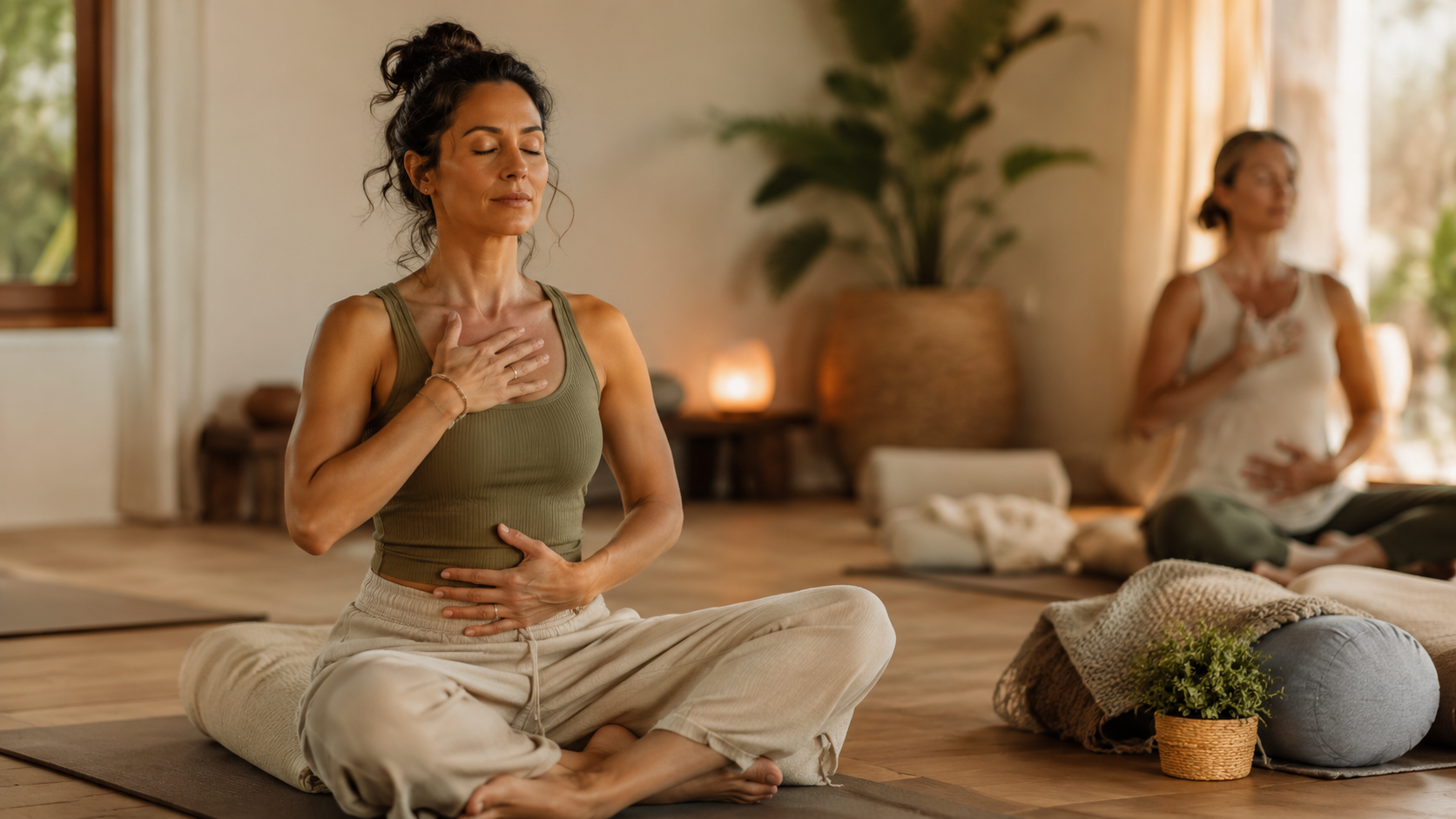
What Is Somatic Yoga? How Body-Based Practice Heals Trauma And Nervous System Stress
Stress does not always live in the mind alone. It can show up as tight shoulders, a clenched jaw, shallow breathing, a guarded belly, restless legs, or the feeling that you cannot fully settle into your own body.
For many people, trauma and chronic stress create a deep disconnect between the body and the present moment. You may understand that you are safe, but your nervous system may still feel braced, alert, numb, or overwhelmed.
Somatic yoga offers a gentle way back into relationship with the body. Instead of asking you to push harder, stretch deeper, or perform a pose correctly, it invites you to listen from the inside. The practice is slow, body-led, and rooted in sensation, choice, breath, and awareness.
What Is Somatic Yoga?
Somatic yoga is a mindful, body-based practice that blends yoga, somatic movement, breath awareness, and nervous system care. The word “somatic” refers to the lived experience of the body from within.
In a somatic yoga practice, the main question is not, “How does this pose look?” The deeper question is, “What do I notice in my body right now?”
You may notice warmth, pressure, tension, numbness, emotion, ease, resistance, or a subtle shift in breathing. These small signals matter. Somatic yoga teaches you to pay attention to them without judgment and without needing to fix everything at once.
The practice often includes slow floor movements, body scans, gentle rocking, supported rest, breath awareness, and small movements repeated with care. It is usually less about flexibility and more about reconnection.
How Somatic Yoga Is Different From Regular Yoga
Many yoga classes focus on poses, alignment, strength, flexibility, balance, or flow. These can be valuable, but they may not always feel safe or accessible for someone carrying trauma, burnout, anxiety, or chronic stress.
Somatic yoga slows the whole experience down. It gives the body time to notice, respond, pause, and choose.
Regular Yoga Often Looks From The Outside In
In a traditional class, a teacher may guide students into a posture and offer alignment cues. The student may try to match the shape, deepen the stretch, or hold the pose for a certain amount of time.
That approach can build strength and discipline, but it can also lead some students to override discomfort.
Somatic Yoga Moves From The Inside Out
Somatic yoga begins with inner experience. You may be invited to make the movement smaller, softer, slower, or more comfortable. You may keep your eyes open, rest at any time, or change the shape completely.
The goal is not to prove anything. The goal is to feel, notice, and gently build trust with the body again.
Why Trauma And Stress Affect The Body
Trauma is not only a memory. Chronic stress is not only a thought pattern. Both can affect the nervous system, muscles, breath, digestion, sleep, posture, and the way a person experiences safety.
When the nervous system senses danger, it can move into survival responses. These responses are intelligent. They are the body’s way of protecting life.
Fight, Flight, Freeze, And Shutdown
Fight and flight may feel like anxiety, urgency, irritability, racing thoughts, or the constant need to stay busy.
Freeze may feel like stuckness, numbness, dissociation, or difficulty taking action.
Shutdown may feel like heaviness, exhaustion, disconnection, or the sense that it is hard to be fully present.
These responses can continue long after the original stress has passed. A person may be physically safe, but the body may still carry patterns of protection.
Somatic yoga supports healing by helping the body experience small moments of safety, movement, breath, and choice.
How Somatic Yoga Supports Nervous System Regulation
The nervous system learns through repetition. When the body repeatedly experiences softness, ease, grounding, and choice, it may slowly become more available for rest and presence.
Somatic yoga does not force the nervous system to calm down. It creates conditions where calm becomes more possible.
It Builds Body Awareness
One of the most important benefits of somatic yoga is interoception, which is the ability to notice internal body signals.
This may include breath, heartbeat, hunger, fullness, muscle tension, temperature, pressure, or emotion. Many people who have experienced trauma learn to disconnect from these signals because feeling the body once felt too overwhelming.
Somatic yoga helps rebuild this connection gently. Instead of rushing into intense emotion, the practice begins with simple noticing.
It Supports The Parasympathetic Nervous System
The parasympathetic nervous system is associated with rest, digestion, repair, and recovery. Slow breath, gentle movement, supported rest, and longer exhales can help the body move toward this calmer state.
This is one reason somatic yoga may feel deeply settling. The body receives repeated signals that it does not have to stay on high alert.
It Releases Bracing Patterns
Stress often creates patterns of holding. The shoulders lift. The jaw tightens. The belly hardens. The breath becomes shallow. The hips grip. The spine stiffens.
Somatic yoga does not attack these patterns. It invites the body to notice them and soften over time.
A small knee rock, a gentle shoulder circle, or a slow pelvic tilt may help the body find movement where it has been braced for years.
Does Somatic Yoga Heal Trauma?
Somatic yoga can support trauma healing, but it should be described with care. It is not a replacement for therapy, medical care, or crisis support. It should not promise to erase trauma or cure PTSD.
What it can do is help people develop a safer relationship with their bodies. It can support grounding, emotional regulation, breath awareness, movement confidence, and present-moment connection.
For some people, this becomes a powerful complement to therapy. For others, it becomes a gentle self-care practice that helps reduce daily stress.
People with intense flashbacks, panic, dissociation, self-harm thoughts, or severe trauma symptoms should work with a qualified mental health provider or trauma-informed practitioner. Somatic yoga should feel resourcing, not overwhelming.
What Happens During A Somatic Yoga Practice?
A somatic yoga class may look quiet from the outside, but a lot is happening internally. The practice is often subtle, spacious, and deeply attentive.
It may begin with a comfortable seated or lying position. The teacher may invite you to notice the ground, breath, temperature, muscle tension, or places in the body that feel neutral or easy.
From there, movement is usually slow and simple.
Common Somatic Yoga Movements
A beginner-friendly practice may include:
Body scans while lying down
Gentle knee rocks from side to side
Small pelvic tilts
Slow shoulder rolls
Soft spinal twists
Cat-cow movements
Hand, foot, and jaw awareness
Grounding through the feet
Breath with longer exhales
Supported rest between movements
The pauses matter as much as the movement. Rest gives the nervous system time to notice change.
Somatic Yoga And Trauma-Informed Practice
Somatic yoga and trauma-informed yoga often overlap. Somatic yoga focuses on sensation and body awareness. Trauma-informed yoga focuses on safety, consent, choice, and the way a class is held.
Together, they create a practice that does not pressure the student to perform, disclose, endure, or push through discomfort.
Yoga Farm’s trauma-informed teacher trainings are rooted in this kind of care. The intention is not to make yoga more complicated. It is to make practice safer, more inclusive, and more connected to the real human body.
A trauma-informed teacher may use invitational language, offer options, avoid hands-on adjustments without consent, and remind students that rest is always available.
That kind of teaching matters because safety is not only about the pose. Safety is also about agency.
Somatic Yoga, Kundalini, And Breath
Breath is a bridge between the body and the nervous system. It can energize, soothe, ground, or awaken awareness depending on how it is practiced.
In somatic yoga, breath is usually approached gently. Students may begin by noticing the breath rather than controlling it. Over time, they may explore longer exhales, belly breathing, or breath paired with small movements.
Kundalini yoga also works deeply with breath, awareness, sound, and energy. When practiced with a modern, trauma-aware lens, it can help students explore vitality and inner steadiness without force or hierarchy.
Yoga Farm’s Kundalini Warrior training reflects this kind of modern approach by honoring choice, accessibility, and spiritual practice without pressure to bypass the body’s signals.
Somatic Yoga And Qigong
Somatic yoga also shares a natural relationship with Qigong. Both practices value slow movement, breath, awareness, energy, and the felt experience of being in the body.
Qigong can be especially supportive for people who do not feel comfortable with mat-based yoga. Many practices can be done standing or seated, with gentle rhythmic movements that help regulate the nervous system.
For students interested in a deeper body-based movement path, Yoga Farm’s Qigong teacher training offers another way to explore embodied practice through energy, breath, posture, and presence.
Both somatic yoga and Qigong remind the practitioner that healing does not always require intensity. Sometimes the medicine is subtle, steady, and repeated with kindness.
Who Can Benefit From Somatic Yoga?
Somatic yoga may be supportive for many people, especially those who feel disconnected from their bodies or overwhelmed by faster practices.
It may be helpful for people experiencing:
Chronic stress
Anxiety
Burnout
Trauma recovery
Muscle tension
Emotional fatigue
Shallow breathing
Difficulty resting
Numbness or disconnection
A desire for gentle, accessible movement
It may also support yoga teachers, therapists, coaches, educators, caregivers, and healing professionals who want to understand the body with more compassion.
Somatic yoga is not only for people with trauma histories. It is also for anyone who wants to live with more awareness, softness, and body trust.
How To Start Somatic Yoga Safely
Beginning somatic yoga does not require advanced flexibility, expensive props, or long practice sessions. It begins with attention.
Start with five to ten minutes. Choose one simple movement, such as lying on your back with knees bent and slowly rocking the knees side to side. Keep the movement small enough that your body does not brace against it.
Move at less effort than you think you need. Many somatic teachers suggest using only 30 to 50 percent of your capacity. This teaches the body that movement can be safe, easy, and responsive.
Keep your eyes open if closing them feels uncomfortable. Stop if you feel overwhelmed. Sit up, look around the room, feel your feet, drink water, or return to something neutral.
The body does not need to be forced into healing. It needs repeated experiences of safety, choice, and care.
What To Look For In A Somatic Yoga Class
A supportive somatic yoga class should feel spacious and invitational. The teacher should not pressure students into deep stretches, emotional release, or perfect shapes.
Look for language around trauma-informed practice, accessibility, nervous system support, gentle movement, and choice.
A good class may include reminders that you can rest, modify, skip a movement, or stop at any time. These cues are not extra. They are part of the healing container.
Students near Ithaca can explore Yoga Farm’s studio classes, where offerings often include gentle yoga, restorative practice, Qigong, meditation, Kundalini, and somatic movement in a community-centered space.
For people practicing from home, an online membership can offer a softer way to stay connected with classes, workshops, rituals, and supportive community practice.
Somatic Yoga Myths
Somatic yoga is sometimes misunderstood because it can look simple. The movements may be small, but the inner work can be meaningful.
Myth: Somatic Yoga Is Just Stretching
Stretching focuses on lengthening muscles. Somatic yoga focuses on awareness, sensation, nervous system response, and the relationship between movement and safety.
A small movement done with attention may create more change than a deep stretch done with force.
Myth: You Have To Release Big Emotions
Some people may feel emotion during somatic yoga, but emotional intensity is not the goal. You do not need to cry, shake, or relive a memory for the practice to matter.
Gentle noticing is enough.
Myth: Somatic Yoga Replaces Therapy
Somatic yoga can support healing, but it should not replace therapy or medical care when those are needed. It works best as part of a larger care system that respects the whole person.
Frequently Asked Questions
What Is Somatic Yoga In Simple Terms?
Somatic yoga is gentle yoga that focuses on how movement feels inside the body rather than how it looks from the outside. It uses slow movement, breath, body awareness, and rest to support nervous system regulation.
Is Somatic Yoga Good For Trauma?
Somatic yoga may support trauma recovery by helping the body experience safety, choice, and present-moment awareness. It should be practiced gently and may work best alongside trauma-informed therapy or care.
How Does Somatic Yoga Calm The Nervous System?
It uses slow movement, grounding, breath awareness, and rest to help the body move out of survival mode. These practices may support the parasympathetic nervous system, which is connected with rest and repair.
Can Somatic Yoga Make You Emotional?
Yes, it can bring emotion to the surface for some people, but that is not required. A safe somatic practice does not chase emotional release. It allows whatever arises to be met slowly and gently.
Is Somatic Yoga Safe For Beginners?
Somatic yoga can be very beginner-friendly because the movements are usually slow, simple, and adaptable. The key is to start small, avoid force, and choose a trauma-informed teacher when possible.
What Is The Difference Between Somatic Yoga And Regular Yoga?
Regular yoga often focuses on poses, flow, flexibility, or alignment. Somatic yoga focuses on inner sensation, nervous system pacing, choice, and body awareness.
Can Somatic Yoga Help Anxiety?
Somatic yoga may help anxiety by supporting slower breathing, grounding, and awareness of body signals. It can help some people feel more present and less trapped in racing thoughts.
How Often Should You Practice Somatic Yoga?
Short, consistent practice is often more supportive than long, intense sessions. Five to ten minutes a few times a week can be a meaningful place to begin.
Coming Home To The Body
Somatic yoga is not about fixing yourself. It is about returning to yourself with patience, curiosity, and care.
For anyone carrying trauma, stress, anxiety, or disconnection, the body can feel like a difficult place to inhabit. Somatic yoga offers another possibility. Through gentle movement, breath, rest, and choice, the body can slowly become a place of listening again.
Healing does not have to be rushed. It does not have to be performed. Sometimes it begins with one small movement, one softer breath, and one moment of feeling supported by the ground beneath you.