
How To Teach Private Yoga Sessions: Intake, Structure And Boundaries
Teaching yoga one on one is different from leading a room full of students. There is more space to personalize the practice, but there is also more responsibility to listen carefully, respond thoughtfully, and understand where your role as a yoga teacher begins and ends.
A strong private yoga session is not simply a group class with one person in it. It is a collaborative practice shaped around the student’s goals, preferences, current capacity, and changing needs.
Private Yoga Starts With The Student
In a group class, you may arrive with a sequence designed around a general theme or level. In a private session, the student becomes the starting point.
One person may want to feel more comfortable practicing at home. Another may be interested in mobility, meditation, breathwork, strength, or learning how to adapt familiar poses to their body.
Your role is not to decide what the student should want. It is to understand their intention, apply your teaching skills, and shape the practice within the boundaries of your training.
Begin With A Thoughtful Private Yoga Intake
The intake process should give you enough context to prepare responsibly without turning the first conversation into a medical assessment.
A short written form followed by a conversation often works well. Ask about previous yoga and movement experience, current goals, preferences, relevant physical considerations, and anything the student would rather avoid.
Ask Questions That Create Context
Good intake questions allow the student to describe their own experience instead of asking the teacher to interpret it for them.
You might ask:
What brings you to private yoga right now?
What would make these sessions feel useful to you?
What kinds of movement or yoga have you enjoyed before?
Is there anything you would prefer not to include?
Are there movements or positions that currently feel uncomfortable?
How would you like to feel after a session?
Teachers who want a more complete framework for private yoga intake and assessment can also consider how goals, session outcomes, ethics, and expectations fit together before one on one work begins.
Know The Difference Between Intake And Diagnosis
A yoga teacher can observe movement, ask how a pose feels, offer alternatives, and notice how a student responds. That is different from diagnosing an injury or trying to identify the medical cause of pain.
If a student says that their shoulder feels uncomfortable, you can adapt the practice or remove movements that increase discomfort. You do not need to determine what is happening inside the joint.
When something falls outside your education or professional scope, referring the student to an appropriate healthcare professional is part of responsible teaching.
Set Expectations Before The First Session
Clear boundaries are easiest to maintain when they are established before there is a problem.
Let students know the length of the session, price, payment process, cancellation policy, late arrival policy, and preferred communication method. If you teach online, clarify whether sessions are recorded and how recordings or personal information will be handled.
These practical details create predictability. When both people understand the structure of the professional relationship, there is more room to focus on the practice itself.
Plan The Practice Without Becoming Attached To It
Preparing ahead can help you enter the session with confidence. The problem begins when finishing the planned sequence becomes more important than responding to the person in front of you.
A student who wanted an active session when booking may arrive tired, stressed, or physically uncomfortable. Private teaching gives you room to slow the pace, simplify movements, introduce props, change the emphasis, or spend more time on a practice that feels useful.
A better understanding of pose foundations and movement mechanics can also help teachers make thoughtful adjustments to sequencing instead of relying on a fixed list of poses.
Good preparation gives you options. It should never prevent you from changing direction.
Check In Without Constantly Correcting
Working one on one makes every movement easier to see, but that does not mean every detail needs to be corrected.
Too much instruction can make the student feel watched rather than supported. Use brief questions at meaningful moments and give them enough quiet to notice their own experience.
You might ask, “How does this version feel?” or “Would you like more or less intensity?”
Practices that emphasize somatic awareness in yoga can be especially useful here because they encourage students to notice sensation, pacing, breath, and internal feedback rather than treating the body as something that must perform correctly.
Make Consent Part Of The Entire Session
Consent matters in every yoga setting, but the closeness of private teaching makes clarity especially important.
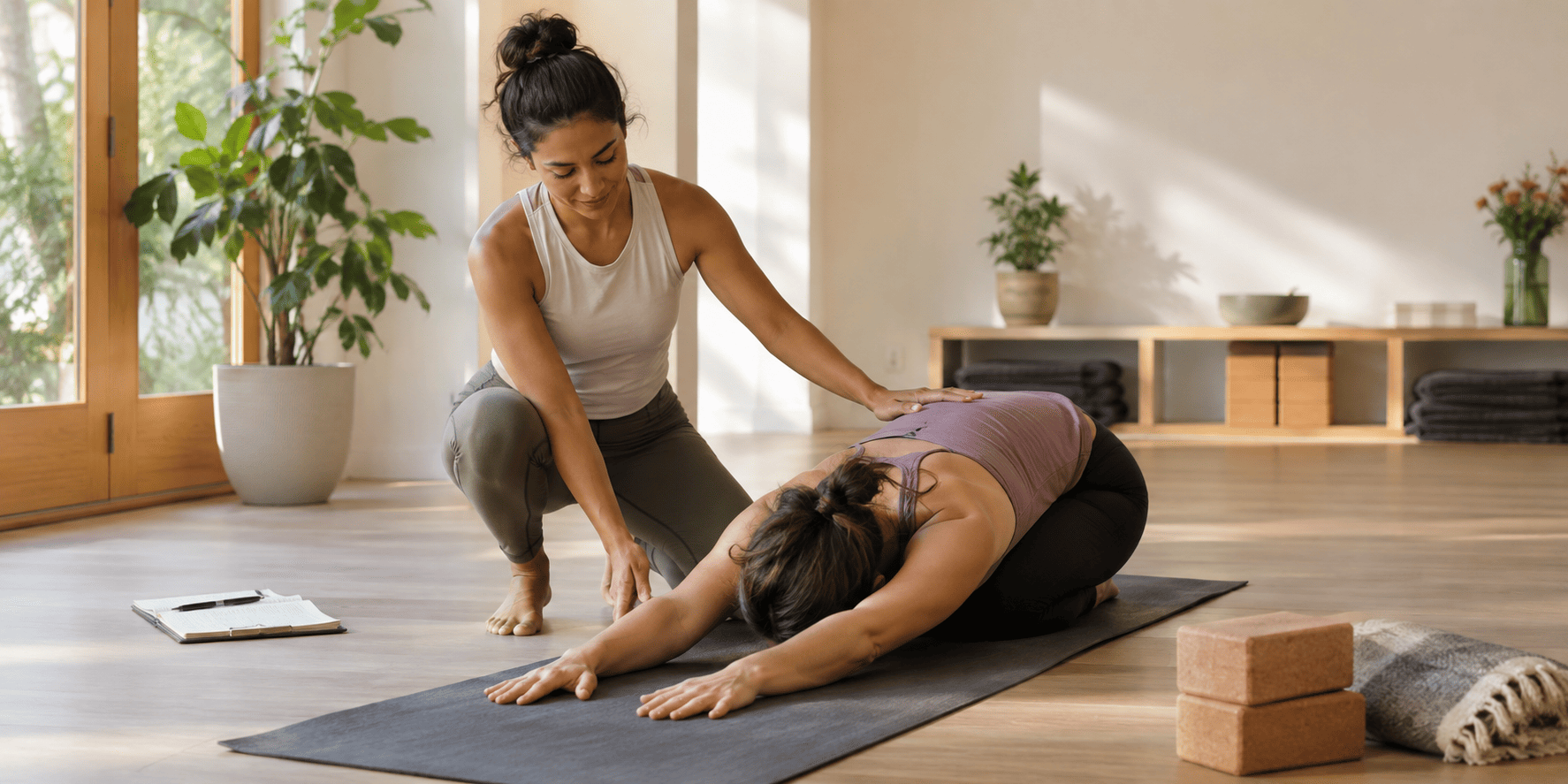
Never assume that booking a one on one session means the student wants hands-on adjustments. Ask first, explain what you are offering when necessary, and make it easy for the student to decline.
Consent from a previous session should not be treated as permanent permission.
Choice Goes Beyond Physical Touch
Consent also affects how people participate in the practice.
Students can be given meaningful options around closing the eyes, breathwork, intensity, resting, changing a pose, using props, or sitting out a particular practice.
A trauma-sensitive approach to yoga can include predictable language, meaningful choices, respect for personal space, and clear consent around physical touch.
Choice does not mean offering endless variations. A few clear options are often more helpful than overwhelming someone with possibilities.
Keep Professional Boundaries Clear
Private students sometimes share more than students in a group class. You may hear about stress, grief, relationships, work, physical concerns, or major life changes because the setting feels personal.
You can listen with care without becoming the student’s therapist, medical provider, or primary emotional support.
Professional boundaries can include:
Physical touch
Session start and end times
Communication outside appointments
Social media contact
Privacy
Payment
Cancellations
Emotional support
Scope of practice
Being warm and being boundaried are not opposites. Clear boundaries often make the relationship more trustworthy.
Close The Session With Reflection
A private session should not simply end when Savasana ends.
Leave a few minutes to ask what the student noticed, what felt useful, and whether anything should change next time. Their experience may be different from what you observed while teaching.
If you suggest something to practice between sessions, keep it manageable. One pose, a short sequence, a few minutes of breathwork, or a simple meditation may be more sustainable than assigning another full hour of yoga.
Let Each Session Build On The Last
Keep simple notes after the student leaves. Record the main focus, practices used, modifications that were helpful, anything the student wants to revisit, and the home practice you agreed on.
These notes help create continuity without turning the relationship into a clinical one.
Over time, you may notice that certain practices consistently help the student settle or that the original goal they brought to the first session has changed.
Personalization becomes more meaningful when the next session remembers the last one.
The First Session And Ongoing Sessions Are Different
The first private session will usually involve more conversation and exploration. You are learning how the student communicates, moves, responds to instruction, and understands their own goals.
Ongoing sessions can become more focused. Begin with a check in, revisit the larger intention, notice what has changed, work with the practice, and leave enough time for reflection.
Progress does not always mean harder poses.
It may look like greater body awareness, more confidence making choices, a steadier home practice, better understanding of personal limits, or more ease within familiar movements.
Common Mistakes When Teaching Private Yoga
Even experienced group teachers may need time to adjust to one on one work.
Common mistakes include:
Planning so much that there is no room to adapt
Arriving without any plan because the session is personalized
Correcting every movement
Talking through every quiet moment
Assuming physical touch is welcome
Trying to diagnose pain or injury
Giving too much home practice
Letting sessions regularly run over time
Becoming available to clients at all hours
Forgetting the goals that originally brought the student to private yoga
Most of these mistakes come from trying too hard to provide value. Better private teaching often means doing less and paying closer attention.
Teach The Person, Not The Plan
Private yoga becomes more meaningful when the student does not feel like a problem to be corrected.
Your knowledge matters, but so does your capacity to listen, stay curious, communicate clearly, and change direction when needed.
A thoughtful intake gives you context. A flexible structure gives the session shape. Consent keeps the student involved in their own choices. Professional boundaries protect the relationship.
Together, these elements create a one on one practice that is built with the student rather than simply delivered to them.
Frequently Asked Questions
How Do You Structure A Private Yoga Session?
A 60 minute private session can include a short check in, grounding or warm up, a longer personalized practice, integration, and a few minutes of reflection. The structure should remain flexible enough to respond to the student’s needs that day.
What Should A Private Yoga Intake Form Include?
A private yoga intake form can include goals, previous yoga or movement experience, relevant physical considerations, preferences, touch preferences, contact information, and practical policies related to the sessions.
What Questions Should I Ask A Private Yoga Client?
Ask what brings them to private yoga, what they hope to experience, what kinds of movement they enjoy, whether anything currently feels uncomfortable, what they would prefer to avoid, and what progress would look like to them.
How Long Should A Private Yoga Session Be?
Sixty minutes is common, although some teachers offer shorter or longer sessions. The right length should leave enough time for check in, practice, integration, and a brief closing conversation.
Should Yoga Teachers Use Hands-On Adjustments In Private Sessions?
Hands-on assists should only be offered when they are appropriate to the teacher’s training and the student has given clear consent. Verbal cueing, demonstrations, props, and self-directed exploration can also be effective.
What Boundaries Should A Private Yoga Teacher Have?
Boundaries may include physical touch, professional scope, communication outside sessions, session times, fees, cancellations, privacy, social media, and emotional support.
Can A Yoga Teacher Give Medical Advice During A Private Session?
Yoga teachers should remain within the scope of their training. Unless they hold separate professional qualifications, they should not diagnose conditions or provide medical treatment. Concerns outside their expertise should be referred to an appropriately qualified professional.