
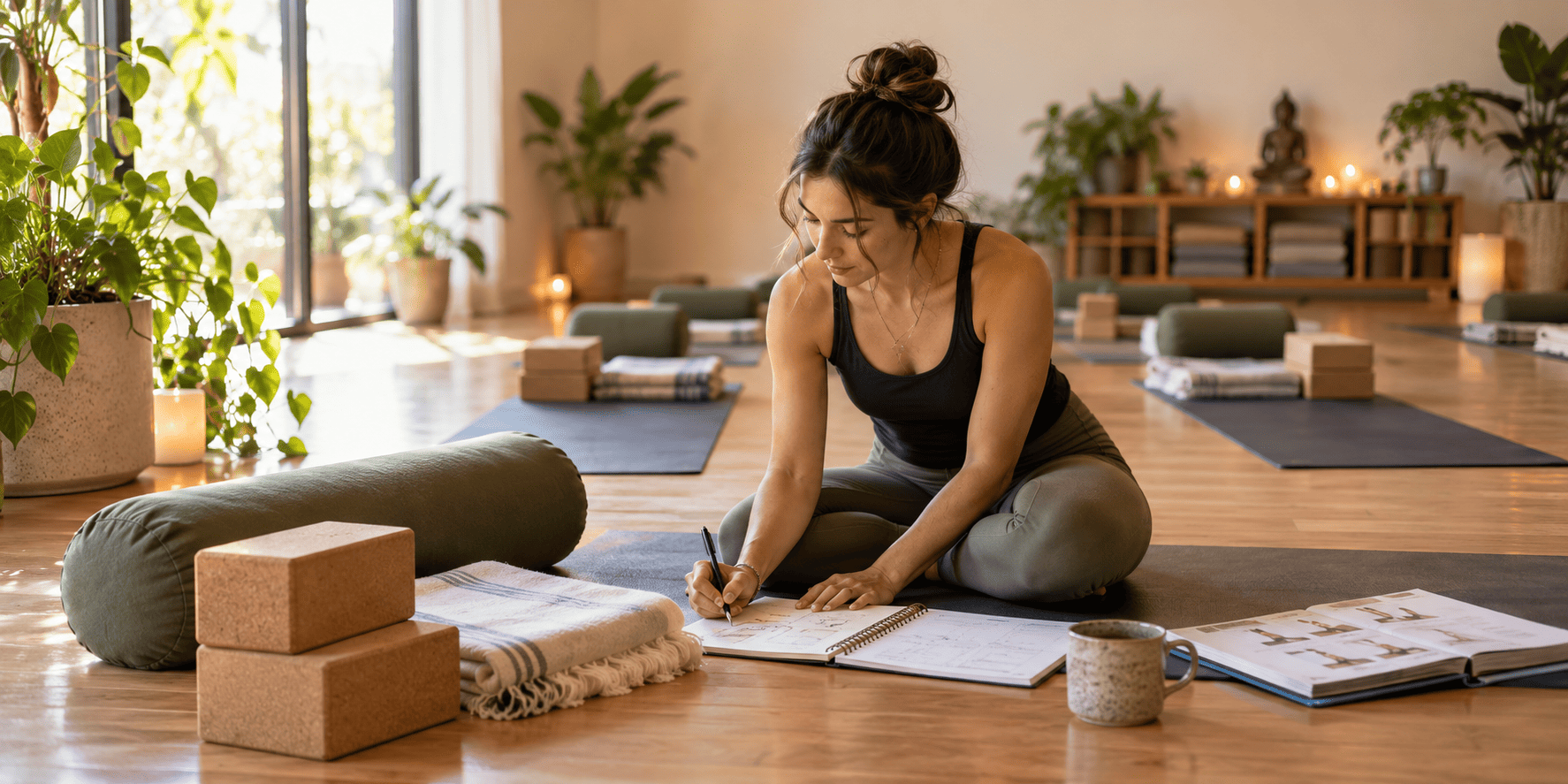
How to Sequence a Yoga Class: Step-by-Step Guide for Teachers
Knowing yoga poses and knowing how to sequence a yoga class are two different skills. You might understand individual postures but still wonder which should come first, how to connect them, or how many to include in a single session.
A well-planned yoga class has a clear intention, prepares students gradually, and provides space for movement, breath, and rest. Whether you're preparing your first class or refining your teaching, these steps will help you create sequences that feel natural, balanced, and accessible.
What Is Yoga Class Sequencing?
Yoga sequencing is the process of arranging postures, breathing practices, transitions, and rest into a meaningful class structure. Each part prepares students for what comes next while supporting the overall intention of the practice.
A sequence might focus on balance, strength, mobility, relaxation, or mindful movement. It doesn't necessarily need an advanced pose or continuous flow.
Good sequencing considers both the physical demands of each posture and the experience of the people practicing it.
How to Sequence a Yoga Class Step by Step
There's no single correct formula for every yoga class. However, following a consistent planning process can help you create thoughtful sequences without making them overly complicated.
Step 1: Understand Who You're Teaching
Before choosing poses, consider your students' experience, physical abilities, and reasons for attending.
A beginner class may need slower transitions and more explanation. An experienced group might appreciate complex movement patterns, while a gentle yoga class may prioritize supported positions and longer pauses.
Planning for different abilities from the beginning makes your sequence more welcoming.
Step 2: Choose a Clear Class Intention
Every class benefits from a central focus. Your intention gives the sequence direction and helps you decide what belongs.
For example, a balance-focused class might include Mountain Pose, standing weight shifts, Warrior II, and Tree Pose.
A relaxation-focused class may use gentle stretches, supported postures, and additional rest.
Keep the intention simple enough that students can experience it throughout the practice.
Step 3: Create Your Basic Class Structure
Most Hatha and Vinyasa classes follow a general progression:
Centering: Help students arrive and settle into the practice.
Warm-Up: Introduce gentle movement and prepare the body.
Main Sequence: Gradually build toward the class focus.
Cool-Down: Reduce intensity and allow recovery.
Final Rest: Provide time for stillness, reflection, or relaxation.
This structure is flexible. You can adjust the time spent in each section according to the class style and students' needs.
Step 4: Select Your Main Focus or Peak Pose
Some teachers build classes around a peak pose, such as Tree Pose, Half Moon Pose, or Bridge Pose.
If your peak involves balancing on one leg, earlier movements might develop awareness of foot placement, hip stability, and weight distribution.
However, not every yoga class needs a peak pose. Your focus might simply be comfortable spinal movement, breathing awareness, or greater confidence in foundational postures.
Step 5: Choose Preparatory Poses
Your warm-up should connect directly to the movements that follow.
For a standing sequence, begin with gentle joint movements, weight shifts, and simple standing postures. If the main practice includes weight bearing through the hands, consider how to prepare the wrists and shoulders.
Understanding these relationships is central to anatomy-informed sequencing, where pose preparation and transitions are chosen with the body's movement patterns in mind.
Step 6: Create Smooth Transitions
Transitions are just as important as the postures themselves.
Consider how students will move between positions. Mountain Pose to Chair Pose creates a natural progression, while moving repeatedly from standing to lying down may interrupt the class rhythm.
In Vinyasa yoga, breath and movement are often coordinated to create continuity.
Give students enough time to understand each transition, adjust their position, and move at a comfortable pace.
Step 7: Include Modifications and Rest Options
A thoughtful sequence offers more than one way to participate.
For Tree Pose, students might keep their toes on the floor, use a wall, or explore standing balance without lifting a foot.
Consider blocks, chairs, and supported alternatives before teaching the class. Rest should remain an available choice rather than something students must earn through effort.
Step 8: Plan the Cool-Down and Practice Your Sequence
After the main sequence, gradually reduce the intensity of movement.
Gentle seated or reclined postures can create a comfortable transition toward Savasana. Students may also prefer seated relaxation or another resting position.
Before teaching, practice the sequence yourself. Say your instructions aloud, check the timing, and notice transitions that feel awkward.
How to Adapt Yoga Sequencing for Different Styles
Different yoga traditions approach sequencing differently. Understanding these distinctions helps you plan classes that match students' expectations.
Hatha Yoga Sequencing
Hatha classes often feature individual postures, intentional breathing, and pauses between movements. Allow time for clear instructions, comfortable holds, and transitions.
Vinyasa Yoga Sequencing
Vinyasa sequencing emphasizes coordinated movement and breath. Repeated patterns and gradual progression can help students understand the flow without constantly introducing new postures.
Gentle and Restorative Yoga Sequencing
Gentle classes generally use simpler movements and more opportunities to rest. Restorative practices prioritize supported positions, comfort, and longer periods of stillness.
How to Make Your Yoga Class More Trauma-Informed
Trauma-informed sequencing considers how students experience instruction, choice, and movement.
A physically gentle class isn't automatically trauma-informed. Even simple postures may feel uncomfortable when students are pressured to participate or are given little control over their experience.
Thoughtful trauma-informed yoga teaching includes consent, predictable transitions, accessible alternatives, and respect for personal boundaries.
You can bring these principles into your sequencing by:
Explaining upcoming movements before asking students to transition.
Offering choices about breathwork, balance, and resting positions.
Allowing students to keep their eyes open during meditation.
Avoiding hands-on adjustments without informed consent.
Using invitations rather than commands that imply there is only one correct way to practice.
These choices help create an environment where students can participate with greater autonomy.
Common Yoga Sequencing Mistakes to Avoid
Even experienced teachers occasionally create sequences that need adjustment. The goal is not perfection but noticing what supports students.
Including too many poses: A crowded sequence leaves little time for instruction or rest. Choose fewer postures and give them meaningful attention.
Skipping preparation: Moving directly into demanding postures may leave students feeling unprepared. Introduce relevant movement patterns first.
Forgetting the second side: Check that your sequence provides appropriate opportunities to practice both sides.
Rushing Savasana: Protect the closing portion of your class rather than using it to make up lost time.
Following a rigid script: A sequence is a guide. Be willing to adapt when students need additional support or rest.
A Simple Yoga Class Planning Template
Before teaching, write down these essential details:
Students: Who is the class designed for?
Intention: What experience or skill are you emphasizing?
Timing: How long is each section?
Postures: Which movements support the intention?
Options: What modifications, props, and rest choices are available?
Closing: How will students transition into relaxation?
Keep your teaching notes simple. A few familiar pose names and transition reminders are often easier to follow than a fully scripted class.
Develop Your Yoga Sequencing Skills With Yoga Farm Ithaca
Confident yoga teaching develops through practice, reflection, and a deeper understanding of how movement, breath, and instruction work together.
Yoga Farm Ithaca's 200-hour Hatha and Vinyasa teacher training includes yoga sequencing, anatomy, cueing, modifications, trauma-informed methods, and practice teaching.
Through self-paced education and opportunities for live support, aspiring teachers can develop their skills while exploring an approach centered on accessibility and student choice.
Explore Yoga Farm's Teacher Training and Build Confidence in Your Teaching.
Frequently Asked Questions About Yoga Class Sequencing
How Many Poses Should Be in a 60-Minute Yoga Class?
There's no required number. The total depends on class style, pose duration, transitions, and instruction. A well-paced class with fewer poses may be more effective than a rushed sequence.
What Should Come First in a Yoga Class?
Many classes begin with centering, gentle breathing awareness, or simple movements. Choose an opening that helps students settle in and prepares them for the practice ahead.
Does Every Yoga Class Need a Peak Pose?
No. A class can focus on mindfulness, mobility, breathing, relaxation, or foundational movements without building toward a challenging posture.
How Do You Sequence Yoga for Beginners?
Start with familiar postures, progress gradually, and use clear transitions. Include accessible variations, regular opportunities to pause, and enough time for students to understand each movement.
Should Every Yoga Pose Have a Counterpose?
Not necessarily. Rather than automatically pairing every posture with its opposite, consider how students feel, which movements follow, and whether recovery or a change of position would be useful.
Can Yoga Teachers Repeat the Same Sequence?
Yes. Repetition helps teachers refine their instructions and allows students to become familiar with the movements. Small changes can introduce variety without rebuilding the class.
How Do You Remember a Yoga Sequence While Teaching?
Organize poses into smaller sections, practice teaching aloud, and use brief notes. Understanding why movements belong together makes the sequence easier to remember.
Create Yoga Classes With Intention and Confidence
Yoga sequencing becomes easier when you stop treating it as a list of poses and start thinking about the experience you're creating.
Begin with your students, choose a meaningful focus, and build gradually. Leave room for individual needs, thoughtful transitions, and rest.
The most effective yoga class isn't necessarily the most complicated. It's one that helps students feel supported, engaged, and free to explore their own practice.