
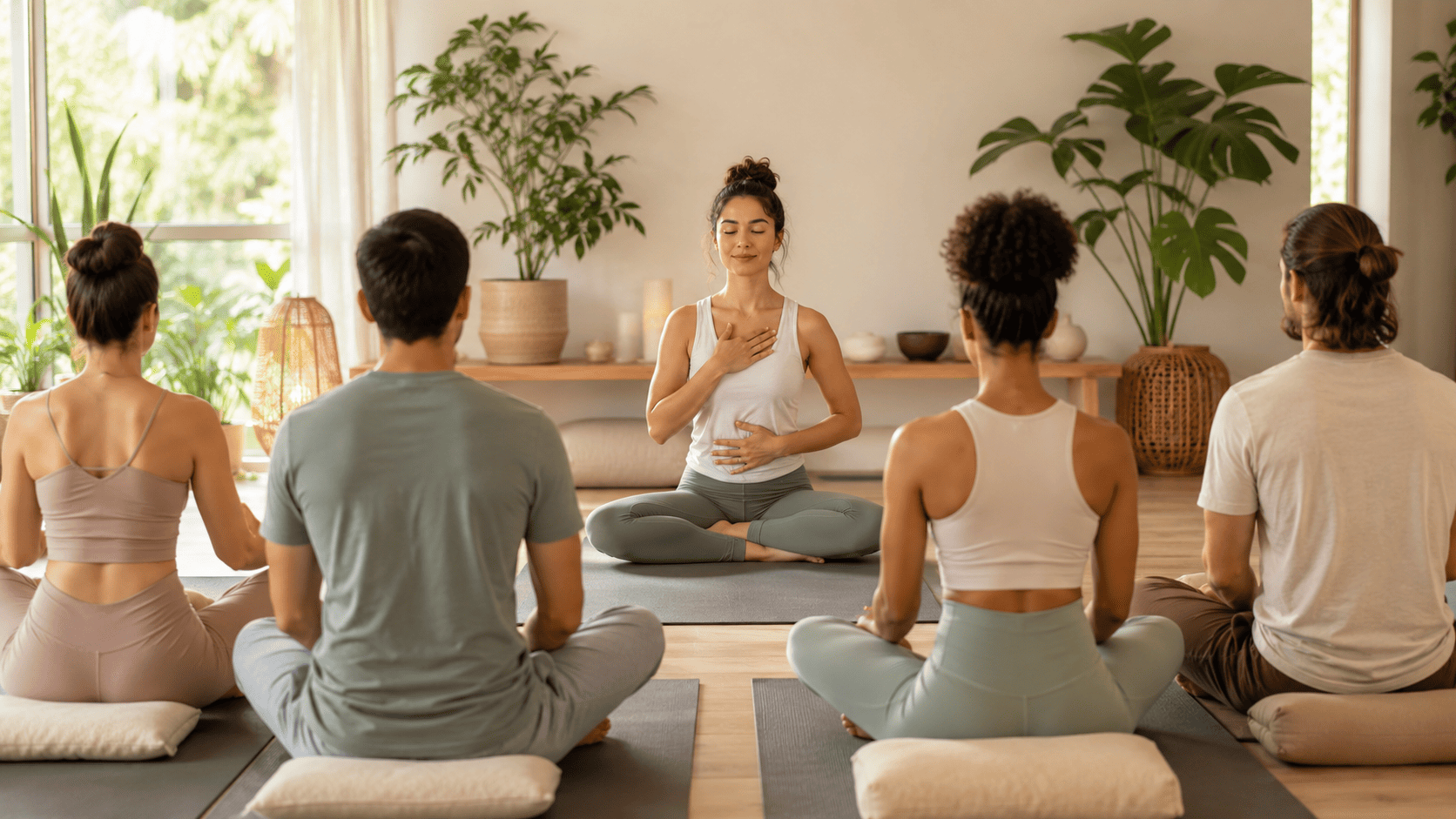
Beginner-Friendly Yoga Breathing Techniques For Stress Relief And Better Health
Breathing is something your body does all day without needing your attention. Yet when you bring gentle awareness to the breath, it can become one of the simplest ways to support your mind, body, and nervous system.
In yoga, breathing practices are often called pranayama. For beginners, pranayama does not need to feel complicated or intense. You do not need special equipment, a flexible body, or years of practice. You only need a few quiet minutes, a comfortable position, and permission to move slowly.
Beginner-friendly yoga breathing techniques can help you feel more grounded during stress, more present in your body, and more connected to your everyday wellbeing. The goal is not to control the breath perfectly. The goal is to build a kinder relationship with yourself, one breath at a time.
What Is Yoga Breathing?
Yoga breathing is the practice of using the breath with awareness and intention. In traditional yoga, pranayama is often understood as the regulation or expansion of life force energy. In a modern wellness context, it can also be understood as a way to influence your nervous system through slow, steady, mindful breathing.
Your breath is both automatic and responsive. It changes when you are stressed, tired, excited, anxious, or relaxed. When your body feels under pressure, breathing often becomes shallow, quick, or held without you realizing it.
Yoga breathing invites you to notice those patterns without judgment. From there, you can gently choose a slower rhythm, a longer exhale, or a more grounded way of breathing that tells your body it is safe to soften.
How Yoga Breathing Supports Stress Relief And Better Health
Stress often activates the body’s fight-or-flight response. This is helpful when you are facing real danger, but it can feel exhausting when the body stays in that state during daily life.
Slow breathing can support the parasympathetic nervous system, which is often associated with rest, digestion, recovery, and calm. This is why a few minutes of intentional breathing may help reduce tension, settle racing thoughts, and create more space between a stressful moment and your response.
Yoga breathing may support:
A calmer response to everyday stress
Better focus during work, study, or meditation
More body awareness during yoga practice
A softer transition into sleep
A steadier sense of presence during emotional moments
It is not a replacement for medical or mental health care, but it can be a helpful daily practice alongside other forms of support.
For students who want to explore breathwork more deeply within yoga practice, Yoga Farm’s Kundalini Yoga Teacher Training includes breath, meditation, mantra, movement, and trauma-aware teaching in a modern, accessible way.
Before You Begin: Gentle Safety Tips
Beginner yoga breathing should feel supportive, not forced. If a technique makes you dizzy, panicky, lightheaded, or uncomfortable, return to natural breathing and pause.
Choose a comfortable seated position, lie down, or sit with your back supported by a wall or chair. Your eyes may be open, softly lowered, or closed. There is no single correct way to begin.
Keep these simple safety tips in mind:
Do not force deep breathing
Stop if you feel dizzy, anxious, or short of breath
Keep the breath smooth instead of intense
Avoid long breath holds if they feel uncomfortable
Practice with eyes open if closing them feels unsafe
Let your body choose a smaller breath when needed
Avoid long breath holds or forceful breathing if you are pregnant, managing high blood pressure, living with a heart or respiratory condition, feeling anxious, or recovering from illness. If you have a medical concern, ask a qualified healthcare provider before practicing breath retention or stronger pranayama.
Most importantly, stay connected to choice. You can stop at any time. Breathwork should help you listen to your body, not override it.
The Best Beginner Yoga Breathing Techniques
The following practices are simple enough for beginners and useful enough to return to for years. Try one at a time instead of doing them all in one session.
Give each technique a few minutes. Notice how your body responds, then choose the practices that feel steady and kind.
1. Diaphragmatic Breathing
Diaphragmatic breathing is also called belly breathing. It is one of the best starting points because it helps you move away from shallow upper-chest breathing and toward a fuller, softer breath.
To practice:
Sit or lie down comfortably
Place one hand on your belly and one hand on your chest
Breathe in slowly through your nose
Feel your belly gently rise
Exhale slowly and let the belly soften back toward the body
The chest does not need to stay completely still. The goal is simply to feel the breath move lower in the body. Practice for one to five minutes.
This technique is helpful for daily stress, grounding, nervous system support, and basic breath awareness.
2. Three-Part Breath
Three-part breath, also called Dirga Pranayama, helps you feel the breath move through the belly, ribs, and upper chest. It is a gentle way to explore the full capacity of the breath without forcing it.
Begin with a soft inhale into the belly. Let the breath expand into the ribs. Then allow the upper chest to receive the last part of the inhale. Exhale slowly from the chest, ribs, and belly.
This does not need to be dramatic. Think of the breath as a wave moving through the body. If it feels like too much, return to simple belly breathing.
Three-part breath is useful before meditation, before a gentle yoga practice, or whenever you want to feel more connected to your body.
3. Extended Exhale Breathing
Extended exhale breathing is one of the most beginner-friendly ways to calm the body. Instead of holding the breath, you simply make the exhale slightly longer than the inhale.
Try this simple pattern:
Inhale for a count of four
Exhale for a count of six
Repeat for five to ten rounds
If that feels too long, inhale for three and exhale for four
The longer exhale can help signal to the body that it is safe to release tension. This practice is especially helpful during racing thoughts, stressful transitions, or moments when you feel emotionally activated.
Extended exhale breathing is also a good option if box breathing or 4-7-8 breathing feels uncomfortable because of the breath holds.
4. Box Breathing
Box breathing uses four equal parts: inhale, hold, exhale, and hold. A common pattern is four counts for each part.
The basic rhythm is:
Inhale for four
Hold for four
Exhale for four
Hold out for four
Beginners can also use a softer version, such as three counts for each part. If the holds feel uncomfortable, remove them and simply breathe in and out evenly.
Box breathing can support focus, grounding, and mental clarity. It is often helpful before a meeting, before sleep, or during a stressful moment when you want a clear structure to follow.
5. 4-7-8 Breathing
4-7-8 breathing is a calming technique often used for sleep and anxiety. The pattern is simple: inhale for four, hold for seven, and exhale for eight.
For many beginners, the full count can feel intense at first. A gentler version might be inhale for three, hold for three, and exhale for five. You can slowly build from there if it feels comfortable.
This practice works best when the breath is soft rather than strained. If you feel lightheaded, stop and return to natural breathing.
4-7-8 breathing may be useful before bed, during anxious thought loops, or when you want to shift out of mental busyness.
6. Ujjayi Breathing
Ujjayi breathing is sometimes called ocean breath because it creates a soft sound in the throat. It is commonly used in yoga classes to support focus and rhythm.
To practice, breathe in and out through your nose while gently narrowing the back of your throat. The sound should be quiet and smooth, almost like fogging a mirror with your mouth closed.
Do not force the sound. Ujjayi should feel soothing, not tight. It can be practiced during seated breathing or gentle movement.
This technique is helpful for mindfulness, concentration, and staying connected to the breath during yoga poses.
7. Alternate Nostril Breathing
Alternate nostril breathing, or Nadi Shodhana, is a balancing breath practice. It is often used to calm the mind and support focus.
To practice:
Sit comfortably
Use your right thumb to close your right nostril
Inhale through the left nostril
Close the left nostril with your ring finger
Release the right nostril and exhale through the right
Inhale through the right, close it, and exhale through the left
That completes one round. Move slowly and keep the breath natural.
If you are congested, dizzy, or uncomfortable with controlling the nostrils, skip this practice or simply imagine the breath moving from side to side.
8. Humming Bee Breath
Humming bee breath, or Bhramari, uses a soft humming sound on the exhale. The vibration can feel calming for the mind and body.
Inhale gently through the nose. Exhale with a low, comfortable hum. Let the sound be easy and soothing.
You may place your hands on your heart, belly, or lap. Some versions include closing the ears, but beginners do not need to do that.
This is a lovely practice before sleep, after a long day, or when your mind feels noisy.
Which Breathing Technique Should You Try First?
The best breath practice depends on what you need in the moment. If you are brand new, start with diaphragmatic breathing or natural breath awareness. These are gentle, simple, and accessible.
Here is an easy way to choose:
For daily stress relief: Try diaphragmatic breathing or extended exhale breathing
For anxiety or racing thoughts: Try breath awareness or extended exhale breathing
For sleep: Try humming bee breath or a modified 4-7-8 breath
For focus: Try Ujjayi or alternate nostril breathing
For body awareness: Try three-part breath
For breath holds that feel uncomfortable: Skip the holds and lengthen the exhale
Yoga breathing is not about doing more. It is about meeting yourself with steadiness.
The Online Academy offers a supportive way to stay connected with yoga, meditation, workshops, and community practice when you want guidance beyond a single breathing exercise.
A Simple 5-Minute Beginner Breathing Routine
If you are not sure where to begin, try this simple routine once a day.
A gentle five-minute practice may look like this:
Minute 1: Notice your natural breath without changing it
Minute 2: Place a hand on your belly and practice diaphragmatic breathing
Minute 3: Feel the breath move through the belly, ribs, and chest
Minute 4: Inhale for four and exhale for six
Minute 5: Sit quietly and notice how your body feels
You can practice this in the morning, before bed, after work, or anytime stress begins to build. Consistency matters more than length. A few gentle minutes each day can be more supportive than one long practice that feels forced.
Yoga Breathing For Anxiety
When anxiety is present, the breath may become tight, shallow, or fast. Some people also feel more anxious when they try to control the breath too much.
That is why gentle practices are important. Breath awareness, extended exhale breathing, and soft belly breathing are often better starting points than intense pranayama.
If you feel anxious during breathwork, try these adjustments:
Keep your eyes open
Sit near a wall or supportive surface
Let the room stay visible
Stop counting if counting creates pressure
Make the breath smaller
Return to natural breathing whenever needed
Breathing can be a supportive tool, but it is not meant to replace therapy, medical care, or crisis support when those are needed.
Yoga Breathing For Better Sleep
Breathwork before bed should be soft, slow, and low-effort. The goal is to invite rest, not create another task.
Humming bee breath, extended exhale breathing, and modified 4-7-8 breathing are good options. Practice while seated on the edge of the bed or lying down with support.
Avoid energizing breathing techniques before sleep, especially forceful breaths or fast-paced practices. The breath should feel like a gentle doorway into rest.
For beginners who enjoy structured support, Yoga Farm’s short programs include accessible entry points into practices such as Kundalini, Qigong, meditation, and chair yoga.
Breathing Exercises To Support Lung Awareness
Yoga breathing can help you become more aware of how you use your lungs, ribs, diaphragm, and posture. Diaphragmatic breathing and three-part breath are especially useful for this.
These practices may help you notice when you are breathing shallowly or holding tension in the chest, jaw, or shoulders. Over time, gentle breath awareness can support more ease in daily breathing patterns.
Gentle breath practices may help you notice:
Where the breath moves most easily
Whether the shoulders lift during breathing
If the belly, ribs, or chest feel restricted
Whether you are holding the breath during stress
How posture affects your ability to breathe comfortably
If you have asthma, COPD, long-term respiratory symptoms, or shortness of breath, practice only with guidance from a healthcare provider. Breathwork should never feel like a struggle.
What About Breath Of Fire?
Breath of Fire is often used in Kundalini yoga. It is a more energizing technique that uses a steady, rhythmic breath powered by the navel.
Although it can be powerful, it is not the best first practice for every beginner. It may feel too stimulating if you are anxious, dizzy, depleted, pregnant, menstruating heavily, or managing high blood pressure.
A gentler path is to begin with belly breathing, extended exhales, and Ujjayi. With time and skilled guidance, stronger practices can be introduced in a way that respects your body and your nervous system.
Students who want a deeper foundation in breath, movement, meditation, and teaching skills often explore a 200-Hour Yoga Teacher Training as a way to understand both practice and safety with more depth.
How Yoga Farm Approaches Breathwork
Yoga Farm Ithaca teaches breathwork as part of a trauma-informed and choice-based yoga practice. The intention is not to push students into intensity or promise instant transformation. The intention is to create space for awareness, self-trust, and steady integration.
Breath may be paired with movement, meditation, mantra, Qigong, or reflection. Each practice is offered as an invitation rather than a demand. Students are encouraged to listen to their bodies, modify when needed, and honor their own pace.
This approach makes yoga breathing more accessible for beginners, sensitive nervous systems, and people who want a practice rooted in compassion rather than performance.
Common Beginner Mistakes To Avoid
Many beginners think they need to take the biggest breath possible. In reality, forcing the breath can create tension or dizziness. Let the breath become fuller gradually.
Try to avoid these common mistakes:
Forcing the inhale
Holding the breath too long
Practicing strong techniques too early
Ignoring dizziness or discomfort
Comparing your breath to someone else’s
Treating breathwork like a performance
Using breathing to push away emotions instead of noticing them gently
Your breath capacity, nervous system, and daily energy will change. Let the practice meet you where you are.
How Often Should Beginners Practice?
Start with two to five minutes a day. Once that feels comfortable, increase to five or ten minutes.
You might practice after waking, before sleep, before a difficult conversation, or after a busy workday. You can also take three gentle breaths during ordinary moments, such as sitting in your car, waiting for tea to steep, or pausing between tasks.
Small practices count. Breathwork becomes more meaningful when it feels available in real life, not only during a formal yoga class.
Final Thoughts: Start With One Breath
Beginner yoga breathing is not about perfect technique. It is about returning to the body with patience, curiosity, and care.
Start with one practice. Notice how it feels. Let yourself adjust the count, position, pace, or length. Your breath does not need to become anything dramatic to support you.
One steady inhale and one softer exhale can be enough to begin again.
FAQs
What Is The Best Yoga Breathing Technique For Beginners?
Diaphragmatic breathing is usually the best place to begin because it is simple, gentle, and helps you feel the breath move through the body.
Which Pranayama Is Best For Stress Relief?
Extended exhale breathing, diaphragmatic breathing, alternate nostril breathing, and humming bee breath are helpful beginner-friendly options for stress relief.
What Are 5 Yoga Breathing Exercises?
Five common yoga breathing exercises are diaphragmatic breathing, three-part breath, Ujjayi breathing, alternate nostril breathing, and humming bee breath.
What Are The 3 Types Of Breathing In Yoga?
A simple beginner way to understand them is belly breathing, rib or chest breathing, and full yogic breathing, also called three-part breath.
Can Yoga Breathing Help Anxiety?
Yoga breathing may support anxiety by helping the body slow down and feel more grounded. Gentle practices are best, especially breath awareness and extended exhale breathing.
Can Breathing Exercises Help Your Lungs?
Gentle breathing exercises can support lung awareness, diaphragm use, and more comfortable breathing patterns. People with respiratory conditions should follow medical guidance.
How Long Should Beginners Practice Pranayama?
Beginners can start with two to five minutes a day. When that feels comfortable, they can slowly increase to five or ten minutes.
Is Breath Of Fire Good For Beginners?
Breath of Fire is more stimulating than basic breathing practices. Beginners should approach it slowly and avoid it during pregnancy, dizziness, panic, high blood pressure, or acute illness.