
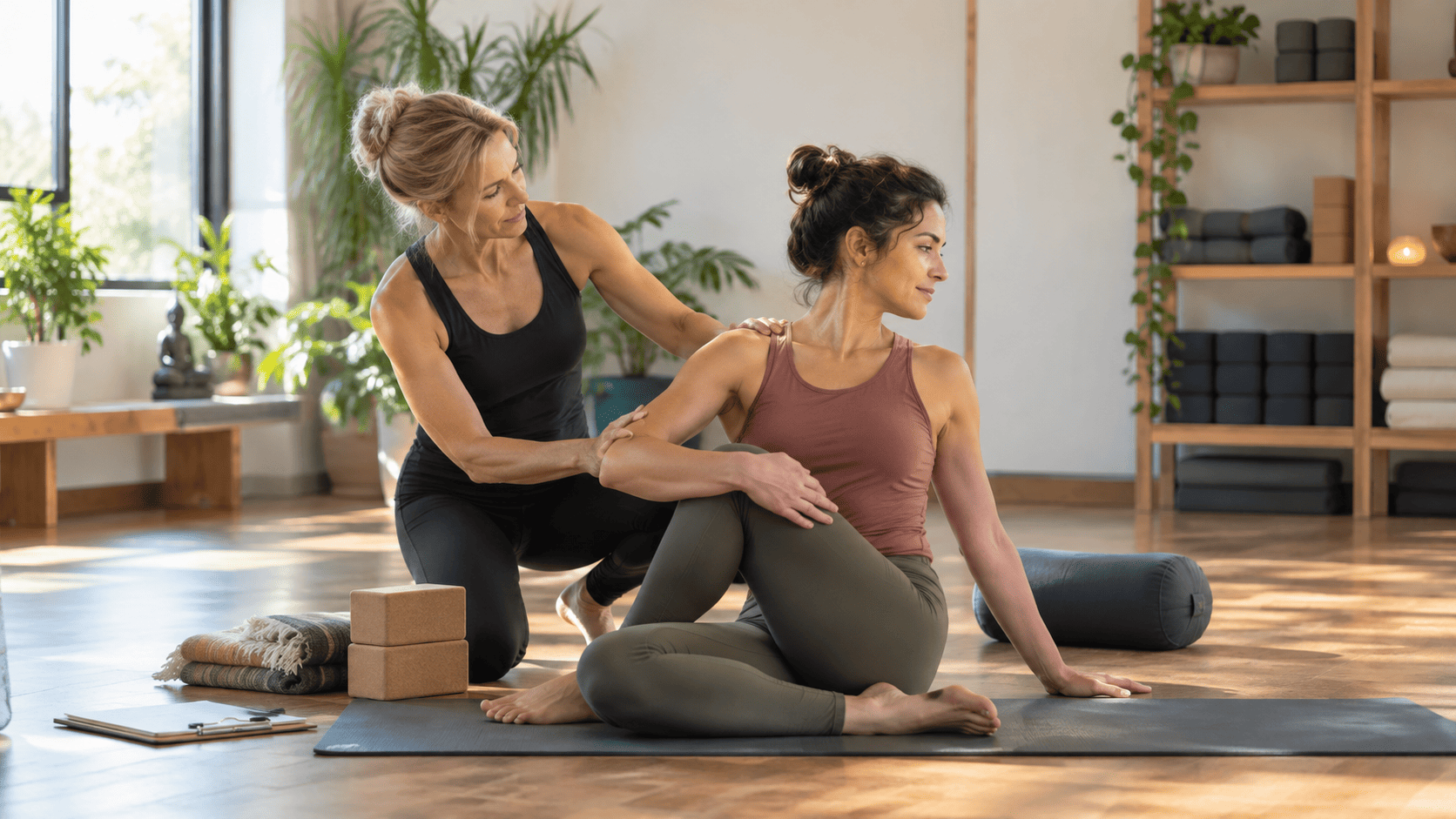
How to Teach Private Yoga Sessions: Intake, Structure and Boundaries
Teaching private yoga is different from leading a room full of students. In a group class, you usually create a practice around a shared theme or level. In a private session, the student becomes the starting point.
Good one-on-one teaching begins with listening. The teacher gathers useful information, understands what the student hopes to experience, builds a flexible session, and creates boundaries that support both people. The goal is not to impress a student with complicated sequencing. It is to offer thoughtful guidance that meets them where they are.
Start With a Thoughtful Private Yoga Intake
A strong private session begins before the first pose. An intake gives you context about the person you are working with and helps you avoid designing a practice around assumptions.
The intake can include a written form followed by a short conversation. Keep the questions relevant to yoga teaching and give the student room to describe their goals in their own words.
Useful areas to cover include:
Their reason for booking private yoga
Previous yoga, fitness, or movement experience
What they hope to gain from the sessions
Movements or practices they enjoy or prefer to avoid
Accessibility needs or relevant physical considerations
Preferences around touch, communication, and home practice
Avoid treating the intake like a medical evaluation. A yoga teacher can ask, listen, observe, and adapt, but diagnosing an injury or medical condition may fall outside a teacher's qualifications.
Let the Student Help Define the Goal
Students sometimes arrive with broad requests such as wanting more flexibility, less stress, better balance, or a deeper yoga practice. Those goals can become more useful through conversation.
Ask what change would feel meaningful to them. Someone who wants more flexibility may really want to sit comfortably on the floor with their children. A person seeking stress relief may want a five-minute breathing practice they can use before work.
Private teaching becomes more effective when success is defined with the student rather than for them. Their goals can also change over time, so revisit the conversation periodically instead of assuming the first goal should guide every future session.
How to Structure a Private Yoga Session
There is no single formula that every private yoga lesson must follow. Still, having a flexible framework can help new teachers feel prepared while leaving enough room to respond to the person in front of them.
Begin With a Check-In
Use the first few minutes to ask how the student is feeling today and whether anything has changed since your last conversation. Their energy, sleep, stress, movement, or comfort may affect what is appropriate that day.
This is also a good time to confirm the focus of the session rather than immediately beginning the sequence you prepared.
Create a Grounded Beginning
A few minutes of breath awareness, gentle movement, orientation, or quiet observation can help the student arrive. The opening does not need to be elaborate.
Choose practices that fit the student's experience and your own training. Private teaching is not about fitting every technique you know into a single hour.
Build the Main Practice Around the Student
For a 60-minute session, the central practice may take around 30 to 35 minutes. It could include Hatha or Vinyasa movement, strength, mobility, restorative poses, meditation, breathwork, or another method within your teaching qualifications.
If you are working with Vinyasa, thoughtful sequencing matters more than speed or complexity. Understanding how poses and transitions relate to each other can help you build a practice with purpose. Yoga Farm's guide to Vinyasa yoga explores how breath, movement, transitions, and intentional sequencing work together.
Leave Time for Integration
Do not fill every available minute with instruction. A closing practice may include rest, gentle movement, meditation, or simply time to notice how the body and mind feel after the session.
Finish with a brief conversation about what felt useful and what the student would like to revisit.
Prepare Without Becoming Attached to the Plan
Planning helps you arrive with confidence, but private yoga requires adaptability. A sequence that looked perfect on paper may not be right once the session begins.
Prepare options rather than one fixed route. Think about how you could simplify a movement, change the pace, add support, remove a posture, or offer another approach if the student responds differently than expected.
This flexibility is an important teaching skill. A strong foundational yoga teacher training should prepare teachers to think about sequencing, cueing, accessibility, breath, and the different ways students may experience the same practice.
Keep the Session Student-Centered
Private students are not paying for more corrections. They are paying for more individual attention.
Observe how the student responds instead of constantly demonstrating or talking. Ask questions when useful. Give them enough time to experience a pose before adding another cue. Avoid treating every difference in alignment as something that needs fixing.
Student-centered teaching also means respecting choice. An option is genuinely an option only when the student feels free to decline it without being pressured or questioned.
Establish Consent Around Hands-On Adjustments
Being alone with a student does not make hands-on adjustments automatically appropriate. Consent should be clear, informed, and ongoing.
Ask before using touch rather than relying on assumptions or something the student agreed to during an earlier session. A student can change their mind at any time.
Verbal cues, demonstrations, props, imagery, and self-adjustment can often communicate what is needed without physical contact. Touch should be one possible teaching tool, not a requirement for providing valuable private instruction.
Create Professional Boundaries Early
Boundaries help private teaching relationships remain clear and sustainable. They are easier to establish before a problem occurs.
Explain your policies around scheduling, cancellations, lateness, payment, communication, and session length. If students can contact you between sessions, clarify which communication method to use and when they can reasonably expect a response.
Emotional boundaries matter too. Students may share personal experiences because private yoga can feel intimate and supportive. Listen compassionately without moving into the role of therapist, doctor, physical therapist, or another professional unless you also hold those qualifications.
Stay Within Your Scope of Practice
Private teaching can create situations where students ask more specific health questions than they might in a group class. Knowing when something falls outside your scope is part of professional yoga teaching.
You can modify practices, offer choices, and work within your education and experience. You should not feel responsible for diagnosing pain, treating an injury, providing mental health treatment, or making medical recommendations beyond your qualifications.
Referring someone to an appropriate healthcare or mental health professional does not mean you failed as a yoga teacher. It shows that you understand the boundaries of your role.
Keep Simple Notes and Follow Up
Private sessions become more valuable when each meeting connects naturally to the last. After the session, note the main focus, practices used, useful modifications, student feedback, and anything you may want to revisit.
Keep notes practical rather than diagnostic. Their purpose is to help you remember the student's experience and create continuity.
You may also offer a small amount of home practice. One breathing technique or a five-minute movement sequence may be more realistic than sending a long routine the student never uses.
Think About the Business Side of Private Yoga
Teaching skill and business structure support each other. Decide how long your sessions are, whether you sell individual appointments or packages, how travel affects pricing, and what happens when a student cancels.
Teachers who are still building their professional foundation may also benefit from understanding the wider possibilities of online yoga teacher training, including flexible study, continued education, and opportunities to strengthen teaching skills over time.
Clear expectations allow both teacher and student to focus more fully on the actual practice.
Deepen Your Skills for One-on-One Yoga Teaching
Private teaching is its own skill set. Teachers who are comfortable leading group classes may still need practice with intake, individualized sequencing, boundaries, assessment, contracts, and the ongoing relationship between teacher and student.
Yoga Farm Ithaca's 50-hour private yoga teacher training takes a student-centered approach to these areas. The self-paced program covers intake and assessment, setting intentions, session structure, ethics, boundaries, contracts, business expectations, and the process of building private sessions that respond to each student's needs.
The deeper practice is not creating the perfect private class. It is becoming skilled enough to listen, prepare, adapt, and support the person in front of you without taking away their agency.
Frequently Asked Questions
How Long Should a Private Yoga Session Be?
Many private yoga sessions are around 60 minutes, although teachers may also offer 75 or 90-minute appointments. A first session may require more conversation because intake, goals, expectations, and preferences need to be discussed.
Do I Need an Intake Form for Private Yoga Clients?
A simple intake form is helpful because it creates a consistent way to gather goals, movement experience, preferences, accessibility needs, and other relevant information. Follow the form with a conversation rather than treating written answers as the entire assessment.
Should I Plan Every Pose Before a Private Yoga Session?
It is useful to arrive with a plan, but avoid making it rigid. Prepare a general direction and several options so you can respond to the student's energy, goals, comfort, and feedback during the session.
Can Yoga Teachers Give Hands-On Adjustments in Private Sessions?
Hands-on adjustments may be appropriate when they fall within the teacher's training and the student has given clear consent. Consent should remain ongoing, and students should always be able to decline touch without pressure.
Should Private Yoga Clients Have a Home Practice?
Home practice can be useful when it supports the student's goals and fits realistically into their life. Keep it manageable. A few minutes of movement, breathing, meditation, or one specific practice may be more useful than a complicated routine.
When Should a Yoga Teacher Refer a Private Client to Another Professional?
Refer a student when their needs move beyond your training or professional scope. This may include requests for medical diagnosis, injury treatment, mental health care, rehabilitation, or other specialized support that requires an appropriately qualified professional.