
Chakra Meditation Techniques: A Beginner-Friendly Guide To The Seven Chakras
Chakra meditation is a gentle way to bring attention back to the body, breath, and inner life. Instead of trying to empty the mind or force a spiritual experience, this practice gives you a clear path to follow through the seven traditional energy centers of yoga.
For many people, chakra meditation feels supportive because it combines breath, visualization, sound, affirmations, and mindful awareness. You can practice it seated on a cushion, resting in a chair, or lying down before sleep.
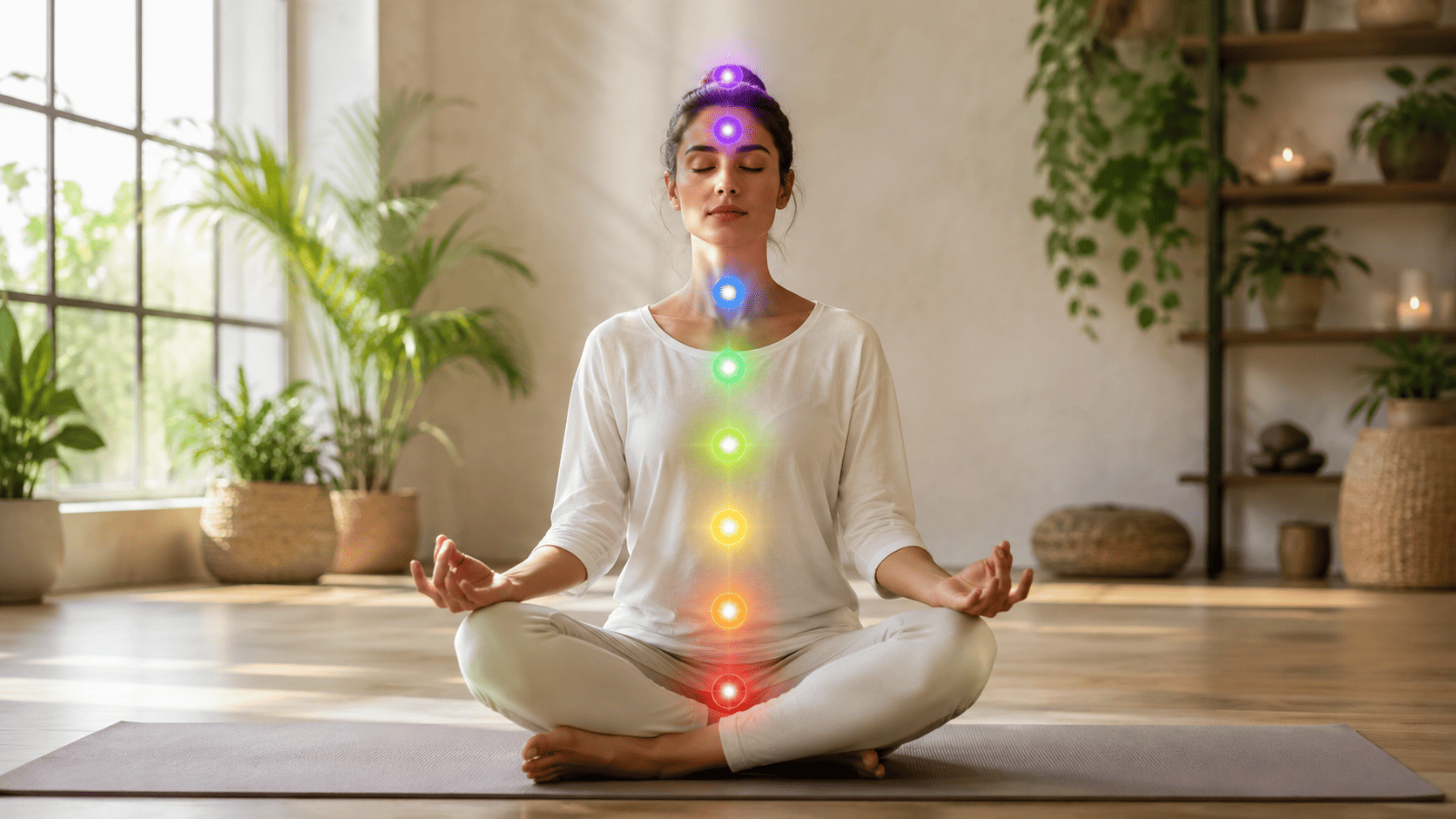
The seven chakras are often described as subtle energy centers that run from the base of the spine to the crown of the head. In meditation, each chakra becomes a place to pause, breathe, listen, and reconnect with a different part of yourself.
What Is Chakra Meditation?
Chakra meditation is a yoga-based meditation practice that guides your attention through the body’s seven main chakras. These chakras are traditionally connected with physical areas, emotional themes, colors, elements, and seed sounds called bija mantras.
You do not have to see colors perfectly or feel strong sensations for the practice to be meaningful. Some people experience warmth, tingling, emotion, or spaciousness, while others simply notice breath and stillness.
The deeper purpose is not to “fix” yourself. Chakra meditation is a practice of awareness. It invites you to notice where you feel grounded, where you feel guarded, where you feel open, and where your energy may need more care.
How Chakra Meditation Works
Most chakra meditations begin at the root chakra and move upward through the body. This bottom-to-top direction helps build a sense of steadiness before moving into more subtle areas like intuition, inner vision, and spiritual connection.
A simple chakra meditation may include:
Breath awareness
Color visualization
Bija mantras
Affirmations
Body scanning
Gentle hand placement
Silent reflection
The practice can be short or long. A beginner may spend one minute with each chakra, while a deeper practice may spend several minutes at each point.
The most important part is to move slowly. A trauma-informed chakra practice should never ask you to force emotion, chase intensity, or override your body’s signals.
How To Prepare For Chakra Meditation
Choose a space where you can sit without rushing. You may light a candle, dim the lights, or simply sit where you feel comfortable and supported.
Your posture does not need to be perfect. Keep your spine upright if that feels good, or sit in a chair with both feet touching the floor. If lying down helps your body relax, that is also a valid way to practice.
Let your eyes close, soften, or stay slightly open. For some people, closed eyes can feel calming. For others, a lowered gaze feels safer and more grounded.
Begin with a few slow breaths. Feel the weight of your body, the support beneath you, and the natural rhythm of the inhale and exhale.
Chakra Meditation Techniques For Beginners
There are many ways to practice chakra meditation. You can use one technique for the whole session or combine several together.
Beginners often do best with a simple structure: breathe, notice the chakra area, imagine the color, repeat the mantra or affirmation, then move to the next chakra.
Breath Awareness
Breath awareness is the foundation of chakra meditation. It helps settle the nervous system and gives the mind something steady to return to.
Begin by breathing slowly through the nose if that feels natural. Let the inhale gently expand the belly and ribs, then let the exhale release without strain.
As you move through each chakra, imagine the breath touching that area of the body. You do not need to control the breath too much. Let it become slower and more spacious over time.
This technique is especially helpful for beginners, anxious minds, and anyone who wants a grounding practice without too much visualization.
Color Visualization
Color visualization is one of the most common chakra meditation techniques. Each chakra is associated with a color, and you can imagine that color as a soft glow, a flame, a wheel, a lotus, or a field of light.
Start with red at the root chakra. Then move to orange, yellow, green or pink, blue, indigo, and violet or white.
The image does not need to be vivid. Even a simple intention, such as “I am bringing awareness to red light at the base of my spine,” is enough.
If visualization feels difficult, keep the practice simple. You can say the color silently or imagine a natural object, like red earth, orange sunset, yellow sunlight, green leaves, blue sky, indigo night, and white starlight.
Bija Mantras
Bija mantras are seed sounds used in yogic practice. In chakra meditation, they are repeated to help focus attention and create a felt vibration in the body.
The common chakra seed sounds are:
LAM for the root chakra
VAM for the sacral chakra
RAM for the solar plexus chakra
YAM for the heart chakra
HAM for the throat chakra
OM for the third eye chakra
Silence or OM for the crown chakra
You can chant the sounds aloud, whisper them, or repeat them silently. If chanting feels uncomfortable, use the mantra internally with your breath.
A gentle rhythm is to inhale naturally, then repeat the sound on the exhale. Let the sound be soft rather than forced.
Affirmations
Affirmations bring language into chakra meditation. They help give the mind a clear, compassionate focus.
You can repeat one affirmation for each chakra:
Root: I Am Safe In This Moment.
Sacral: I Allow My Feelings To Move.
Solar Plexus: I Trust My Inner Strength.
Heart: I Give And Receive Love With Care.
Throat: My Voice Is Clear And True.
Third Eye: I Listen To My Inner Wisdom.
Crown: I Am Connected To Something Larger Than Myself.
Choose affirmations that feel believable enough for your body to receive. If “I am safe” feels too far away, try “I am here” or “I can notice one steady breath.”
This small shift matters. Chakra meditation works best when it feels honest, not forced.
Body Scan Chakra Meditation
A body scan is helpful if you do not connect easily with colors or mantras. Instead of imagining energy, simply notice physical sensations.
Bring your awareness to the root chakra and ask, “What do I notice here?” You may feel pressure, warmth, numbness, pulsing, tightness, or nothing at all.
Move slowly upward through each chakra location. Do not label sensations as good or bad. The practice is to notice, breathe, and allow.
This technique is especially useful for people who want a more grounded and body-based practice.
Mudra-Based Chakra Meditation
Mudras are hand gestures used to support focus in yoga and meditation. They can give the body a simple anchor while the mind moves through the chakras.
For a beginner practice, you do not need a complex mudra for every chakra. You can place your hands on the body area you are meditating on, such as the lower belly, heart, or throat.
You can also rest your palms face down on your thighs for grounding or face up for receptivity. Let the gesture support your attention without becoming another thing to perfect.
A Simple 7-Chakra Meditation Practice
This practice can take 10 to 20 minutes. Move slowly and adjust the timing based on your body.
Begin seated or lying down. Take three steady breaths. Feel the surface beneath you and let your body arrive.
Root Chakra Meditation
Bring your attention to the base of your spine. Imagine a soft red light or a sense of earth beneath you.
Silently repeat: “I am grounded.”If you use mantra, repeat LAM slowly with the exhale.
Let this chakra remind you that meditation begins with the body. You are not trying to float away. You are practicing presence.
Sacral Chakra Meditation
Move your attention to the lower belly, just below the navel. Imagine a warm orange glow.
Silently repeat: “I allow my feelings to move.”If you use mantra, repeat VAM with ease.
Notice whether this area feels open, tight, warm, quiet, or unknown. Let your breath create space without pushing.
Solar Plexus Chakra Meditation
Bring awareness to the upper belly, below the ribs. Imagine yellow light like a steady flame.
Silently repeat: “I trust myself.”If you use mantra, repeat RAM.
This chakra is connected with will, confidence, and personal power. Let the practice be strong but not harsh.
Heart Chakra Meditation
Bring attention to the center of the chest. Imagine green or pink light spreading gently with each breath.
Silently repeat: “I meet myself with compassion.”If you use mantra, repeat YAM.
There is no need to force love or forgiveness. Let the heart be exactly as it is today.
Throat Chakra Meditation
Move awareness to the throat. Imagine a clear blue light around the neck and jaw.
Silently repeat: “My voice matters.”If you use mantra, repeat HAM.
Soften the tongue, jaw, and shoulders. Notice any impulse to speak, swallow, sigh, or release.
Third Eye Chakra Meditation
Bring your attention to the space between the eyebrows. Imagine deep indigo light or a quiet night sky.
Silently repeat: “I welcome clarity.”If you use mantra, repeat OM.
Let your awareness become spacious. You do not need to see visions or receive answers. Rest in listening.
Crown Chakra Meditation
Bring awareness to the top of the head. Imagine violet or white light, or simply a sense of openness above you.
Silently repeat: “I am connected.”You may rest in silence or repeat OM softly.
Stay here for a few breaths. Let the practice be simple and calm.
Return To The Body
Before ending, bring awareness back down through the body. Feel your face, throat, heart, belly, pelvis, legs, feet, and hands.
Notice the room around you. Take one fuller breath. Open your eyes slowly if they were closed.
You may want to journal one sentence about what you noticed. Keep it simple: “Today I felt grounded,” “My heart felt guarded,” or “I need more rest.”
Chakra Meditation For Anxiety
Chakra meditation for anxiety should be gentle, grounding, and slow. If your mind feels busy or your body feels activated, begin with the root chakra rather than moving quickly to the upper chakras.
A calming anxiety practice may include feet on the floor, eyes softly open, and longer exhales. You can place one hand on the belly and one hand on the heart.
Focus on simple affirmations:
I Am Here.
I Can Breathe Slowly.
I Am Supported By The Ground.
I Do Not Need To Force This Practice.
For anxiety, it may be better to spend most of the practice with the root, sacral, and heart chakras. These areas can help you reconnect with steadiness, feeling, and self-compassion.
If meditation increases anxiety, stop and orient to the room. Name five things you can see, feel your feet, drink water, or reach out for support.
Chakra Meditation For Sleep
Chakra meditation can also become a calming evening ritual. For sleep, keep the practice softer and less stimulating.
Lie down comfortably and let the breath slow. Instead of moving from root to crown, you may move from crown down to root so the practice ends in grounding.
Imagine each chakra light becoming softer and dimmer, like the body is preparing to rest. Use gentle affirmations such as:
I Release The Day.
I Am Allowed To Rest.
My Body Can Soften.
I Am Held By The Earth.
Avoid intense breathwork or strong chanting before sleep if it makes you feel energized. A quiet body scan may be enough.
Best Time To Do Chakra Meditation
The best time to do chakra meditation depends on what you need from the practice.
Morning is helpful when you want grounding, focus, and intention for the day. A morning practice can begin at the root and rise to the crown to create clarity and energy.
Evening is helpful when you want reflection, emotional release, and rest. A slower practice can move downward through the body to help you settle.
You can also practice after yoga, after journaling, before a difficult conversation, or when you feel disconnected from yourself.
Consistency matters more than the exact time. Five mindful minutes done regularly can be more supportive than one long session that feels forced.
Is Chakra Meditation Dangerous?
Gentle chakra meditation is generally low-risk for many people, but it should be practiced with care. The goal is not to push the body into intense energetic experiences.
Stop or pause if you feel overwhelmed, dizzy, dissociated, panicked, or unsafe. Open your eyes, feel your feet, look around the room, and return to ordinary awareness.
Be cautious with forceful breath retention, intense visualization, or practices that promise sudden awakening. These may not be appropriate for everyone, especially without experienced guidance.
Chakra meditation is not a replacement for medical care, therapy, or mental health support. It can be a personal spiritual or mindfulness practice, but it should never pressure you to ignore your needs.
Chakra Meditation Through A Trauma-Informed Yoga Lens
A trauma-informed approach changes the way chakra meditation is practiced and taught. Instead of telling the body what it should feel, it invites the body to participate with choice.
Yoga Farm’s approach to modern yoga and Kundalini practice centers accessibility, consent, and nervous-system awareness. That matters because chakra work can touch emotional themes like safety, power, grief, voice, intuition, and belonging.
A trauma-informed chakra practice may include options like sitting in a chair, keeping the eyes open, skipping a chakra that feels too intense, or using breath instead of visualization.
It also avoids the idea that a person is broken because a chakra is “blocked.” A more compassionate view is that the body may be protecting, adapting, or asking for care.
Students who want a deeper chakra-based practice can explore the Kundalini 102 Chakra Journey, which moves through the chakra system with Kundalini practices and guided support. Those wanting a larger training path may find that Kundalini Yoga Teacher Training offers a more complete foundation for teaching and personal practice.
For ongoing practice, the online yoga membership offers a softer way to stay connected through classes, workshops, and community learning.
Common Mistakes In Chakra Meditation
Chakra meditation is simple, but beginners often put too much pressure on the experience.
One common mistake is trying to “open” all the chakras quickly. A slower practice is often more supportive, especially if you are new to meditation or carrying stress.
Another mistake is expecting dramatic sensations. You may feel energy, emotion, or warmth, but you may also feel quiet. Both are valid.
Many people also skip grounding. Spending time with the root chakra helps the rest of the practice feel safer and more embodied.
Try to avoid these habits:
Forcing colors or visions
Holding the breath too long
Judging yourself for wandering thoughts
Practicing only the third eye or crown
Using chakra meditation to avoid difficult feelings
Treating discomfort as a sign of failure
The practice becomes more useful when it is steady, kind, and honest.
Chakra Meditation Script For Beginners
Use this short script when you want a guided chakra meditation. You can read it slowly, record it in your own voice, or move through it silently.
Find a comfortable seat or lie down. Let your hands rest somewhere easy. Take a slow breath in, and a slow breath out.
Feel the support beneath you. Let your body know that there is nothing to perform right now.
Bring awareness to the base of your spine. Imagine red light, warm and steady. Silently say, “I am grounded.”
Move awareness to your lower belly. Imagine orange light, soft and fluid. Silently say, “I allow my feelings to move.”
Bring awareness to the upper belly. Imagine yellow light, steady like the sun. Silently say, “I trust my inner strength.”
Bring awareness to the center of your chest. Imagine green or pink light. Silently say, “I meet myself with compassion.”
Move awareness to your throat. Imagine blue light around your voice. Silently say, “I speak with truth and kindness.”
Bring awareness between your eyebrows. Imagine indigo light or a quiet night sky. Silently say, “I listen to my inner wisdom.”
Bring awareness to the crown of your head. Imagine violet or white light, soft and spacious. Silently say, “I am connected.”
Now feel all seven centers together. Root, belly, solar plexus, heart, throat, brow, and crown.
Let the breath move through the whole body. Nothing needs to be fixed. Nothing needs to be forced.
Feel your hands. Feel your feet. Notice the room around you. Take one final breath and return gently.
How Often Should You Practice Chakra Meditation?
Beginners can start with 5 to 10 minutes, two or three times per week. This is enough to build familiarity without turning meditation into another task on the to-do list.
If you enjoy the practice, you can extend it to 15 or 20 minutes. You can also spend a full session with one chakra, especially if a theme feels present in your life.
For example, you may work with the root chakra during a season of change, the heart chakra during grief or relationship healing, or the throat chakra when you are practicing honest communication.
A full seven-chakra meditation once a week can be a beautiful way to check in with your whole system.
Frequently Asked Questions
What Is The Best Chakra Meditation Technique For Beginners?
The best beginner technique is breath-based visualization. Start at the root chakra, breathe slowly, imagine the chakra color, and move upward through the body one center at a time.
Which Chakra Should I Meditate On First?
Most beginners should start with the root chakra. It supports grounding, safety, and stability before moving into emotional, expressive, intuitive, or spiritual centers.
How Long Should Chakra Meditation Take?
A beginner practice can take 5 to 10 minutes. A full seven-chakra meditation may take 15 to 30 minutes depending on how long you stay with each chakra.
Can Chakra Meditation Help With Anxiety?
Chakra meditation may support anxiety by slowing the breath, grounding awareness, and helping the body feel more present. It is not a replacement for therapy or medical care.
Can Chakra Meditation Help With Sleep?
Yes, a gentle chakra meditation can support sleep when practiced with slow breathing, soft visualization, and calming affirmations. For bedtime, avoid intense breathwork or forceful chanting.
Do I Need To Believe In Chakras?
No. Some people approach chakras as part of a spiritual tradition, while others use the chakra map as a body-awareness practice for reflection, breath, and emotional check-in.
What Are The Seven Chakra Mantras?
The common seed mantras are LAM, VAM, RAM, YAM, HAM, OM, and silence or OM for the crown chakra. You can chant them aloud or repeat them silently.
What Is The Best Time To Do Chakra Meditation?
Morning is helpful for energy and focus. Evening is helpful for rest and reflection. The best time is the one you can return to with consistency.
Final Thoughts
Chakra meditation is not about becoming perfectly balanced or spiritually complete. It is a practice of listening inward with patience and care.
Through breath, visualization, mantra, affirmation, and gentle awareness, the chakra system gives you a meaningful way to explore your body, emotions, voice, intuition, and connection.
Begin simply. Stay grounded. Let the practice meet you where you are.