
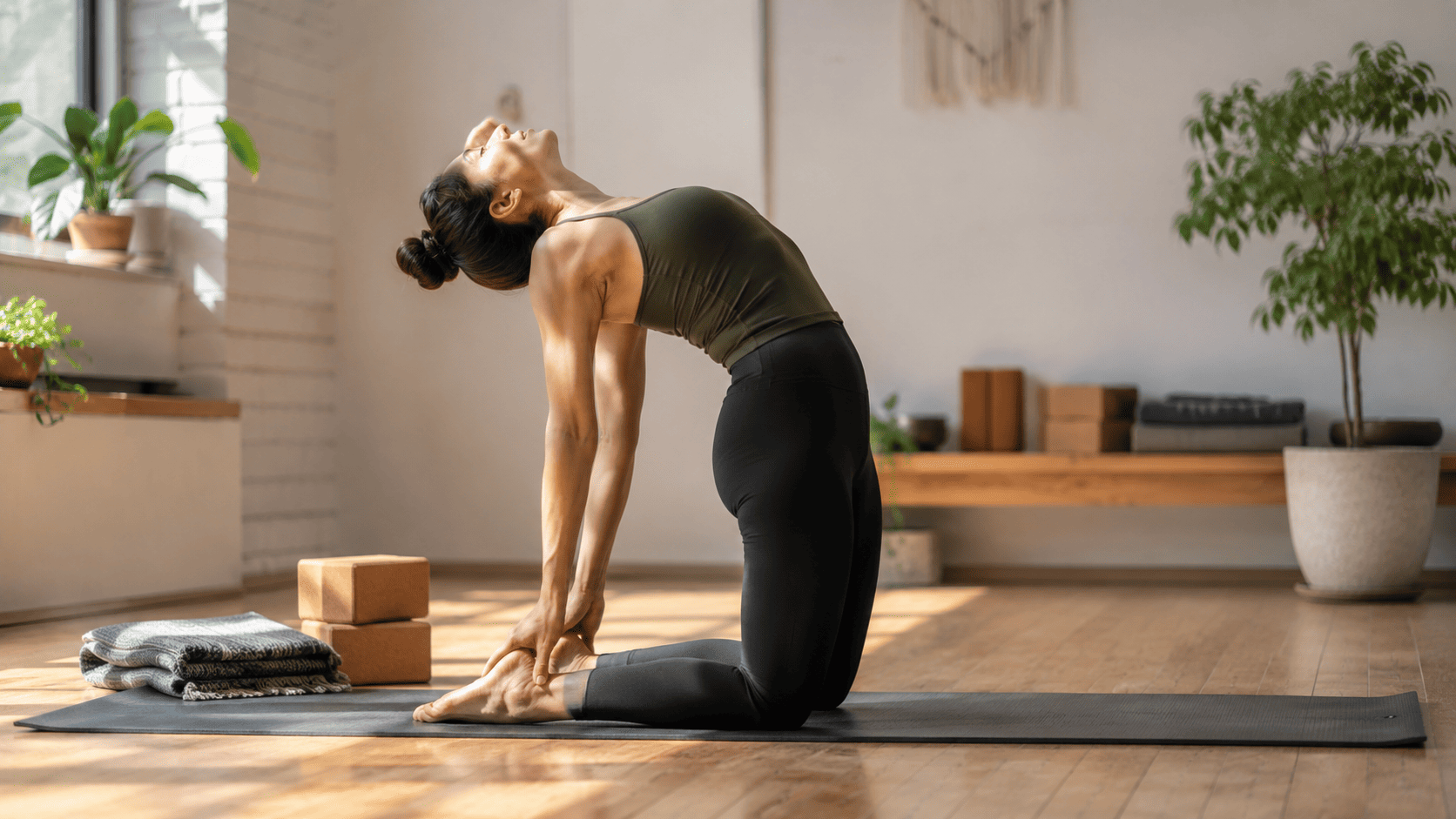
Camel Pose (Ustrasana): How To Practice This Backbend Safely
Camel Pose, or Ustrasana, is a kneeling backbend that opens the front of the body while asking for strength, mobility, balance, and awareness. You may feel the pose across your chest, shoulders, abdomen, hip flexors, and thighs while the muscles along your back and core work to support you.
The fullest expression places the hands on the heels, but touching your heels is not what makes Camel Pose complete. A supported variation can offer many of the same qualities while giving you more room to breathe, notice sensation, and work with your own anatomy.
What Is Camel Pose?
Ustrasana comes from the Sanskrit words ustra, meaning camel, and asana, meaning posture or pose. It is commonly practiced in Hatha and Vinyasa yoga as a deeper backbend and heart opening posture.
Unlike backbends performed while lying on the floor, Camel begins from kneeling. Your thighs remain upright as you lift through the chest and gradually extend the spine backward. This combination makes alignment through the hips, core, upper back, and legs especially important.
If understanding why poses work interests you as much as practicing them, Yoga Farm's Foundations of the Pose explores yoga anatomy, biomechanics, sequencing, and safer ways to approach movement.
What Muscles Does Camel Pose Work?
Camel Pose combines stretching and muscular engagement rather than simply bending the spine backward. The front of the body lengthens while several muscle groups work to keep the posture supported.
You may feel a stretch through the:
Chest and shoulders
Abdomen
Hip flexors
Quadriceps
Front of the thighs
Your back muscles, core, glutes, thighs, and muscles around the shoulders also contribute to stability. The exact sensations will vary depending on your proportions, mobility, previous movement experience, and the variation you choose.
Benefits Of Camel Pose
One reason Ustrasana appears in many yoga traditions is that it asks several parts of the body to work together. Practiced with appropriate support, Camel Pose can encourage mobility through the chest, shoulders, hips, and spine.
It may also help strengthen the muscles involved in supporting a backbend and develop greater awareness of how you distribute movement through your spine. For people who spend much of the day sitting or leaning forward, opening the front body can feel particularly refreshing.
Camel Pose is often described as energizing. Some practitioners notice a sense of spaciousness across the chest or a shift in attention after practicing it. Those experiences are personal, and there is no particular physical or emotional response you need to achieve.
How To Do Camel Pose Step By Step
Approach the pose gradually. You can stop at any stage rather than treating the final hand position as the goal.
1. Set Up Your Kneeling Position
Kneel with your knees approximately hip width apart and the tops of your feet resting on the mat. Keep your thighs relatively upright rather than immediately sitting your hips back toward your heels.
Place your hands at the back of your pelvis or lower back. Use this position to become aware of your hips, thighs, and spine before moving deeper.
2. Lift Through Your Chest
Inhale and create length through your spine. Think about lifting the sternum upward before thinking about bending backward.
Keep your legs active and allow the front of the pelvis to stay supported. This can help distribute the backbend rather than directing all of the movement into your lower back.
3. Move Into The Backbend
Begin extending backward gradually while continuing to lift through the chest. Your hips can move forward enough to stay supported over the knees rather than drifting far behind them.
Keep your hands on your pelvis if this already feels like an appropriate edge.
4. Choose Your Hand Position
If you have enough space and stability, reach one hand and then the other toward your heels. Tucking your toes can raise the heels and make them easier to reach.
You can also place yoga blocks beside your ankles and bring your hands to the blocks. There is no need to force your hands to the heels.
5. Breathe And Return Slowly
Keep breathing steadily. For many practitioners, three to five breaths are enough when beginning.
To come out, bring your hands back toward your pelvis, engage through your center, lift your chest, and return to upright kneeling with control.
What Should Camel Pose Feel Like?
A supported Camel Pose may create a strong stretch across the front body, particularly through the chest, hip flexors, thighs, and abdomen. Your legs and back body may feel active as they help support the position.
Strong sensation and pain are not the same thing. Sharp pain, tingling, numbness, dizziness, neck compression, or pinching in the lower back are reasons to come out of the pose and reassess.
Developing this kind of awareness is also part of thoughtful yoga education. Yoga Farm's 200-hour Hatha and Vinyasa teacher training includes anatomy, alignment, sequencing, modifications, accessibility, and trauma-informed approaches to teaching movement.
Why Does My Lower Back Hurt In Camel Pose?
Lower back discomfort is one of the most common challenges people experience in Camel Pose. It can happen when most of the backbend is concentrated in the lumbar spine rather than distributed through the upper back, hips, and shoulders.
Trying to reach the heels before your body is ready can also change your alignment. The hips may shift backward, the ribs may flare, and the lower back can take on more extension than feels comfortable.
Instead of reaching farther, return your hands to your pelvis. Lift through your chest, engage your legs and core without aggressively gripping, and explore a smaller backbend. Less range can create a stronger and more useful pose when it gives you better control.
Common Camel Pose Mistakes
Several small adjustments can make Ustrasana feel very different.
Reaching For The Heels At All Costs
Your heels are simply one possible hand placement. Use your pelvis, blocks, or raised heels if that allows you to maintain steadier breathing and alignment.
Dropping The Head Back Too Quickly
Neck extension is optional. Keeping your gaze forward or slightly upward may be a better choice, especially while you are developing confidence in the pose.
Forgetting The Legs
Camel Pose is not only a spinal movement. Active thighs and a stable lower body provide a foundation for the backbend.
Holding Your Breath
Breath is useful feedback. If you cannot breathe comfortably, consider reducing the depth of the pose.
Thoughtful cueing becomes even more important when teaching poses to different bodies. Yoga Farm's guidance on teaching yoga effectively emphasizes clear communication, preparation, demonstrations, and adapting instruction to the people actually practicing.
Camel Pose For Beginners
Beginners do not need to move directly from kneeling into full Ustrasana. A gradual progression gives you time to understand how the pose feels without chasing depth.
You might begin with hands at your pelvis and practice simply lifting the chest. From there, try blocks beside the ankles. Tucking the toes raises the heels and can shorten the distance your arms need to travel.
Half Camel Pose, or Ardha Ustrasana, is another useful option. One hand remains connected to the body or reaches upward while the other moves toward a heel, allowing you to explore backbending with less demand.
How To Prepare For Camel Pose
Camel Pose usually feels more accessible after the body has already been moving. Gentle spinal movements and poses that prepare the shoulders, thighs, hip flexors, and back body can help.
Useful preparation may include Cat Cow, Low Lunge, Cobra Pose, Locust Pose, Bridge Pose, and gentle chest opening movements. Rather than rushing through these poses, notice where movement feels available and where your body asks for more time.
People practicing from home can also benefit from formats that allow them to revisit instruction. Yoga Farm's overview of live and on-demand yoga classes explains how different learning formats can support practice, feedback, flexibility, and repetition.
What To Do After Camel Pose
Come back to an upright position first and give yourself a moment to notice your breathing and your spine. You do not have to immediately fold deeply in the opposite direction.
From there, a comfortable Child's Pose, neutral kneeling position, Happy Baby, or gentle seated forward fold may feel supportive. Choose based on what your body is communicating rather than following a rigid rule about counterposes.
Why Can Camel Pose Feel Emotional?
Some people describe Camel Pose as emotionally intense. Backbending exposes the front of the body and places you in a position where you cannot easily see behind yourself, which may feel vulnerable, energizing, challenging, or liberating.
Traditional yogic frameworks also associate heart opening postures with Anahata, or the Heart Chakra, which is connected symbolically with compassion, openness, and connection.
That does not mean Camel Pose automatically releases stored emotions or trauma. Your experience may be emotional, completely physical, peaceful, uncomfortable, neutral, or different each time. All of those experiences are valid.
Who Should Avoid Or Modify Camel Pose?
A deep backbend is not appropriate for every body or every day. People dealing with current back, neck, knee, or spinal injuries may need to modify or avoid the posture.
If you experience dizziness, significant pain, recent surgery, or have been advised to limit backbending, seek guidance from an appropriate healthcare professional and a qualified yoga teacher before attempting deeper variations.
Pregnancy can also change what feels comfortable and appropriate, so individualized guidance is preferable to applying one modification to everyone.
Practicing Camel Pose Without Chasing Perfection
Yoga does not require every body to create the same shape. Reaching your heels, dropping your head back, or creating a dramatic backbend does not automatically make a practice more advanced.
A trauma-informed approach leaves room for choice. You can use props, stay higher, keep your hands on your pelvis, change your neck position, or leave the pose entirely. What matters is developing awareness and making decisions that support your body today.
Camel Pose can become less about accomplishing a shape and more about exploring strength, openness, breath, and attention. That approach makes Ustrasana a practice you can return to with curiosity rather than something you need to conquer.
Frequently Asked Questions
What Is Camel Pose Good For?
Camel Pose can stretch the chest, abdomen, hip flexors, shoulders, and thighs while strengthening muscles that support spinal extension. It can also help develop mobility, balance, body awareness, and confidence with backbending.
Is Camel Pose Beginner Friendly?
Beginners can practice modified versions of Camel Pose. Keeping your hands on your pelvis, using blocks, or tucking your toes can reduce the range required.
Why Is Camel Pose Emotional?
Some practitioners experience vulnerability, energy, fear, or other emotions during backbends. Traditional yoga also associates Camel with the Heart Chakra, although an emotional response is not required or guaranteed.
Why Does My Lower Back Hurt In Camel Pose?
Lower back discomfort can occur when too much movement is concentrated in the lumbar spine. Reduce the depth, lift through your chest, maintain support through your legs and core, and avoid forcing your hands toward your heels.
Do You Have To Touch Your Heels In Camel Pose?
No. Your hands can remain on your pelvis or rest on blocks. Touching the heels is one variation, not a requirement.
Should You Drop Your Head Back In Camel Pose?
No. Neck position should feel comfortable and controlled. You can maintain a more neutral neck rather than dropping your head backward.
How Long Should You Hold Camel Pose?
Three to five comfortable breaths can be plenty for beginners. The quality of your breathing and alignment matters more than how long you remain in the posture.
What Can I Do Instead Of Camel Pose?
Bridge Pose, Supported Bridge, Cobra Pose, Sphinx Pose, and gentle kneeling chest openers can provide some similar backbending and front body opening qualities with different levels of intensity.