
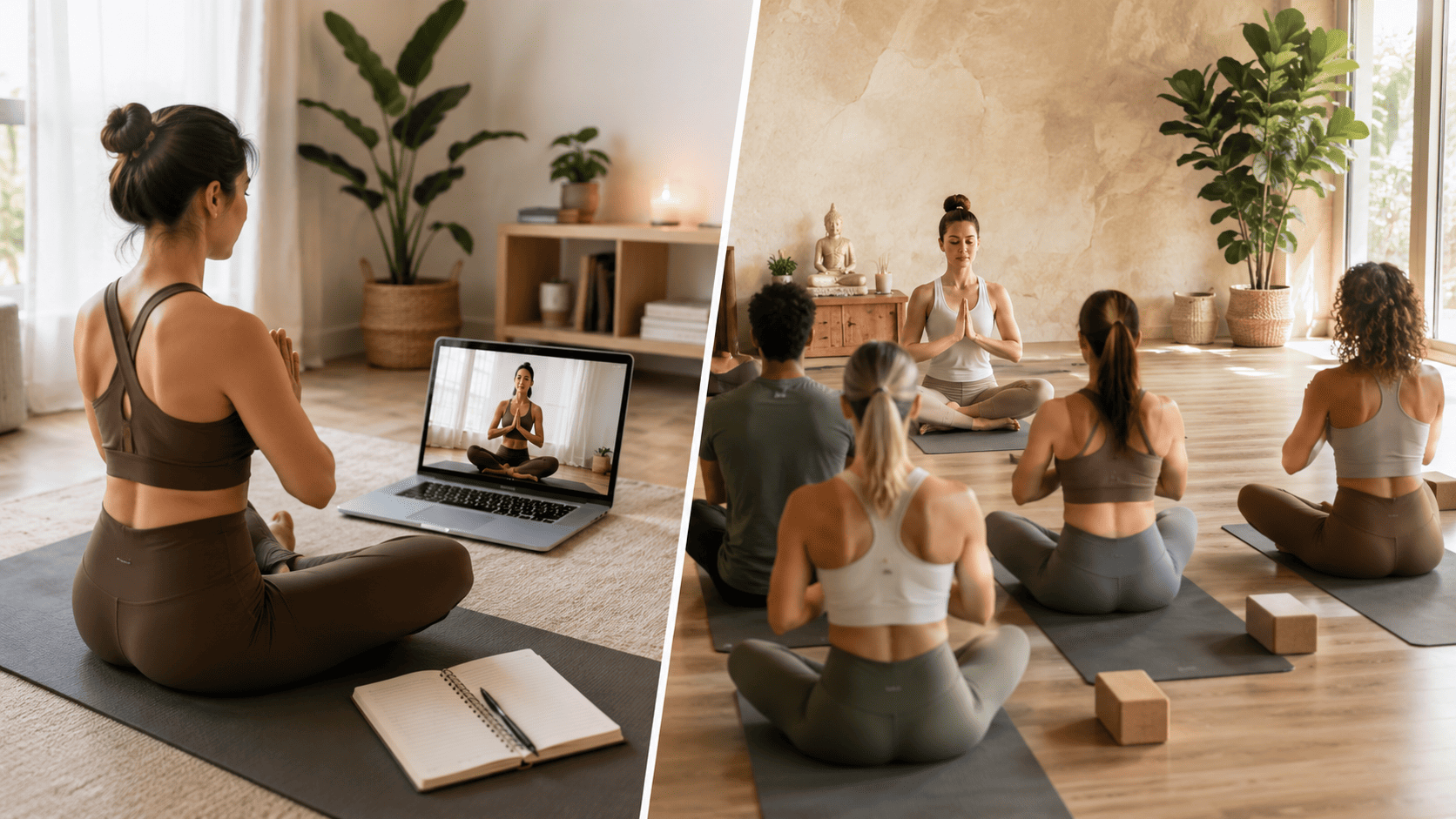
Online Vs. In-Person Yoga Teacher Training: Which Format Is Right For You?
Choosing a yoga teacher training is not only about becoming a yoga teacher. It is also about choosing the kind of learning environment that will help you feel supported, steady, curious, and connected.
For some students, that means stepping into an in-person studio or retreat setting and being held by the rhythm of a group. For others, it means studying from home, moving at a flexible pace, and having time to integrate the teachings into real life.
Online and in-person yoga teacher training can both be meaningful, complete, and transformative. The right format depends on your schedule, budget, learning style, nervous system, and long-term goals.
Online Vs. In-Person Yoga Teacher Training At A Glance
Before choosing a program, it helps to understand what each format offers. One is not automatically better than the other. Each one supports a different kind of student and a different season of life.
A thoughtful training should include strong curriculum, experienced teachers, practice teaching, feedback, ethics, anatomy, philosophy, and support, whether it happens online or in person.
What Is Online Yoga Teacher Training?
Online yoga teacher training allows students to complete their coursework through live classes, recorded lessons, reading, practice teaching, discussion groups, assignments, and mentorship from home.
Some online programs are fully self-paced. Others are live online, with scheduled classes and real-time interaction. Many programs use a combination of both, which gives students structure while still allowing flexibility.
Online training is especially helpful for people who may not have access to a trusted yoga school nearby. It also opens the door to teachers, lineages, and communities that would otherwise require travel.
Benefits Of Online Yoga Teacher Training
The greatest strength of online yoga teacher training is flexibility. Students can often study around work, caregiving, family life, school, health needs, or other responsibilities.
This matters because many future yoga teachers are not able to leave life behind for several weeks. A flexible online program allows yoga education to become part of daily life instead of something that requires total disruption.
Online training can also be more affordable. Students often save money on travel, lodging, meals, parking, childcare, and time away from work. For many people, that makes teacher training possible for the first time.
Another benefit is replay access. Complex topics like anatomy, sequencing, Sanskrit, yoga philosophy, pranayama, and teaching methodology often need more than one pass. Being able to pause, rewind, and return to a lesson can support deeper understanding.
Online learning can also feel emotionally safer for some students. Studying from home gives space to rest, reflect, take breaks, and integrate the work at a personal pace.
Challenges Of Online Yoga Teacher Training
Online training also asks for self-discipline. Without the physical container of a studio or retreat, students need to create a rhythm for study, practice, and completion.
Screen fatigue can also become real. A strong online training should not feel like endless passive video watching. It should include movement, reflection, live conversation, practice teaching, and meaningful community interaction.
Another common concern is the lack of hands-on adjustments. Online students may not receive physical posture corrections in the same way they would in a studio.
That said, modern yoga teaching is moving toward a more consent-based and student-centered approach. Many teachers now focus less on physical adjustments and more on clear cueing, accessible options, nervous-system awareness, and respect for each student’s body.
What Is In-Person Yoga Teacher Training?
In-person yoga teacher training takes place in a shared physical setting, such as a yoga studio, retreat center, school, or dedicated training space.
Some in-person trainings meet on weekends over several months. Others are immersive programs that happen over a few weeks in a retreat-style environment.
This format creates a strong container. Students arrive, practice together, ask questions in real time, teach in front of peers, and build relationships through shared experience.
Benefits Of In-Person Yoga Teacher Training
In-person training offers immediate physical presence. Teachers can observe how students move, breathe, cue, sequence, and hold space in the room.
For tactile learners, this can be deeply helpful. Being able to see, hear, and feel the group environment can make teaching practice feel more embodied.
In-person training can also create strong community quickly. Students spend long hours together, often sharing meals, conversations, practices, and vulnerable moments of growth.
The immersive nature can be powerful. Stepping out of daily life and into a focused learning environment helps some students experience a deeper personal reset.
Challenges Of In-Person Yoga Teacher Training
In-person training can be less accessible for many students. The cost may include tuition, travel, lodging, meals, time off work, and childcare.
The schedule is often less flexible. If a student misses a required weekend or intensive, it may be difficult to make up the material.
The pace can also feel intense. Long training days, group processing, physical practice, and new material can be nourishing, but they can also be overwhelming for some nervous systems.
For students who need more spaciousness, online or hybrid formats may feel more sustainable.
Live Online, Self-Paced, And Hybrid Training
Not all online yoga teacher trainings are the same. This is an important point because many students imagine online training as a library of videos with no real connection.
A high-quality online program should include support, interaction, and opportunities to practice teaching. The format matters.
Live Online Yoga Teacher Training
Live online training gives students scheduled classes, real-time conversation, group practice, and direct access to teachers.
This format works well for students who want accountability and community, but still need to study from home. It can feel surprisingly connected when the school creates space for questions, reflection, and peer support.
Self-Paced Online Yoga Teacher Training
Self-paced training gives students the most flexibility. It is often best for people with unpredictable schedules or those who like to move slowly through material.
This format requires more personal motivation, but it also allows students to revisit lessons as many times as needed. For some learners, that repetition is one of the biggest benefits.
Hybrid Yoga Teacher Training
Hybrid training combines online learning with in-person practice, retreats, or intensives. This can be a beautiful middle path.
Students may complete anatomy, philosophy, assignments, and lectures online, then gather in person for practice teaching, embodiment, community, and integration.
Is Online Yoga Teacher Training Legitimate?
Yes, online yoga teacher training can be legitimate when the program is complete, ethical, well-supported, and transparent about certification requirements.
The key question is not only where the training happens. The better question is what the training includes.
A strong yoga teacher training should teach more than poses. It should include yoga philosophy, anatomy, sequencing, teaching methodology, ethics, practice teaching, accessibility, trauma-informed language, and feedback.
It should also help students develop their own voice as teachers. Memorizing scripts is not enough. A good program supports confidence, clarity, presence, and adaptability.
Will You Be Ready To Teach After Online Training?
Many students do teach after completing online yoga teacher training. Readiness depends on the depth of the curriculum, the quality of support, and how much practice teaching the student completes.
Online programs can support teaching practice through live teaching labs, peer groups, video submissions, written assignments, office hours, and feedback from educators.
Students should look for a program that gives them chances to speak, cue, sequence, reflect, and receive guidance. Teaching yoga is a skill that develops through practice.
If you know you need in-room feedback before teaching publicly, an in-person or hybrid option may be helpful. If you are self-directed and supported by live mentorship, online training can also prepare you well.
How To Choose The Right Format For You
The best format is the one you can fully show up for. A beautiful in-person training may not serve you if the schedule creates stress, debt, or exhaustion. A flexible online training may not serve you if you need the structure of being physically present.
Ask yourself what kind of support helps you grow.
Do you need a flexible schedule? Do you have a trusted yoga school nearby? Are you comfortable learning online? Do you want to study slowly and revisit lessons? Do you need the energy of a room? Is cost a major factor? Do you want a trauma-informed space where you can move at a steady pace?
Your answers will often point you toward the right path.
Choose Online Yoga Teacher Training If...
Online training may be the right fit if you need flexibility, live far from a school you trust, have work or family responsibilities, or want to study without travel costs.
It may also be right if you enjoy rewatching lessons, reflecting before you respond, and integrating the material into your daily life.
Online training can be especially supportive for students who want a more spacious learning experience. Instead of compressing transformation into a short intensive, they can let the work unfold over time.
Choose In-Person Yoga Teacher Training If...
In-person training may be right if you learn best through physical presence, group energy, and immediate feedback.
It may also be a good fit if you want a strong container, a retreat-like experience, or a break from your usual environment.
Some students thrive when the schedule is already created for them. If you know that structure helps you stay committed, in-person training may offer the accountability you need.
Choose Hybrid Yoga Teacher Training If...
Hybrid training may be the right fit if you want flexibility and physical connection.
This format can be useful for students who want to complete lectures, readings, and philosophy online, but still gather in person for practice teaching, community, or embodiment.
Hybrid learning can also reduce travel costs while preserving some of the relational depth of an in-person program.
What To Look For In Any Yoga Teacher Training
No matter which format you choose, look closely at the school before enrolling. A program’s quality matters more than the delivery method alone.
A strong training should include:
Experienced and accessible teachers
Clear certification requirements
Anatomy and physiology
Yoga philosophy and ethics
Teaching methodology
Sequencing and cueing
Practice teaching
Feedback and mentorship
Trauma-informed language
Accessibility and modifications
Community support
Transparent tuition and payment options
Student reviews or testimonials
The training should also feel aligned with your values. Yoga teacher training is a personal and professional path, so the school’s culture matters.
A Trauma-Informed Lens On Format
A trauma-informed yoga teacher training considers more than content. It also considers the learning environment.
This includes pacing, choice, consent, accessibility, language, nervous-system awareness, and the emotional safety of the student experience.
For some people, in-person training feels grounding because the room, teachers, and peers create a strong container. For others, online training feels safer because they can participate from home, take breaks, turn off the camera when needed, and return to replays.
Neither response is wrong. Your body and nervous system may have valuable information about the environment where you will be able to learn best.
How Yoga Farm Supports Online Yoga Teacher Training
Yoga Farm Ithaca is a nonprofit modern yoga school offering online and in-person yoga, Qigong, and spiritual education. The school’s work centers community, healing, purpose, trauma-informed practice, and accessible learning for students in many different seasons of life.
Students can explore flexible online certification paths through Yoga Farm’s online teacher training programs, including the Radiant Warrior 200-Hour Hatha/Vinyasa Yoga Teacher Training, the Kundalini Warrior 200-Hour Yoga Teacher Training, the Spiritual Warrior 300-Hour Yoga Teacher Training, and online Qigong training options like Qigong Level 1.
The online format is designed to support students through live classes, replays, office hours, community connection, and trauma-aware teaching. For students who need financial support, Yoga Farm’s community scholarships can also make training more accessible.
Final Thoughts: The Right Format Is The One That Supports Your Growth
Online and in-person yoga teacher training can both be powerful. The real question is which format will help you stay present, engaged, supported, and able to complete the training with care.
Choose online if you need flexibility, affordability, replay access, and the ability to study from home. Choose in-person if you want immersion, physical presence, and a structured group environment. Choose hybrid if you want a little of both.
The path into teaching yoga does not have to look one way. It simply needs to be honest, supportive, ethical, and aligned with the kind of teacher and practitioner you are becoming.
FAQs
Here are some common questions students ask when comparing online and in-person yoga teacher training.
Is Online Yoga Teacher Training Worth It?
Yes, online yoga teacher training can be worth it when the program includes skilled teachers, a complete curriculum, practice teaching, feedback, and student support.
It is especially helpful for students who need flexibility, live far from a trusted school, or want to study at a pace that fits their real life.
Is Online Yoga Teacher Training Recognized?
Online yoga teacher training can be recognized when the school clearly explains its certification standards and meets the requirements connected to that credential.
Before enrolling, review the school’s curriculum, certification details, teacher experience, and graduation requirements.
Can I Teach Yoga After Online Teacher Training?
Yes, many students teach after completing online yoga teacher training. Your readiness depends on your practice, feedback, confidence, and the quality of your training.
Look for a program that includes teaching practice, sequencing, cueing, ethics, anatomy, and mentorship.
Is In-Person Yoga Teacher Training Better Than Online?
Not always. In-person training is better for students who need physical presence, immediate feedback, and group immersion.
Online training may be better for students who need flexibility, lower total cost, replay access, or the ability to learn from home.
What Is The Biggest Difference Between Online And In-Person YTT?
The biggest difference is the learning environment. Online training gives more flexibility and access, while in-person training gives more physical presence and built-in structure.
Both can be effective when the program is thoughtful, complete, and supportive.
Is Hybrid Yoga Teacher Training A Good Option?
Yes, hybrid training can be a strong option for students who want online flexibility with some in-person connection.
It can work well for students who want to complete lectures and coursework online, then gather for practice teaching, retreat time, or deeper integration.